
Modern optical collections wholesale gives optical retailers access to current frame styles and practical options for building a balanced assortment. A reliable China-based supplier should offer more than appealing catalog photos. Buyers need clear information about frame materials, dimensions, hinge construction, color choices, and lens compatibility. Small details matter. A bridge that sits too high can affect comfort throughout the day.
When evaluating collections, compare physical samples with their specification sheets. Check frame width, temple length, nose fit, finish, and packaging condition. Ask how designs are updated, repeat orders are handled, and quality checks are documented. These details help buyers judge consistency without relying on broad promises. Confirm minimum order quantities, lead times, customization options, and shipping terms before committing. The right balance depends on each store’s customers.
An experienced supplier can help retailers compare classic silhouettes with lightweight, contemporary shapes. Useful support includes responsive communication, accurate product descriptions, and practical assortment guidance. Still, no collection is perfect. A popular color may sell slowly in one market, while a simple acetate frame performs well elsewhere. That is worth remembering. Begin with samples, collect customer feedback, and adjust the range over time. This measured approach can help retailers build a modern assortment with fewer surprises and a clearer basis for future purchasing.
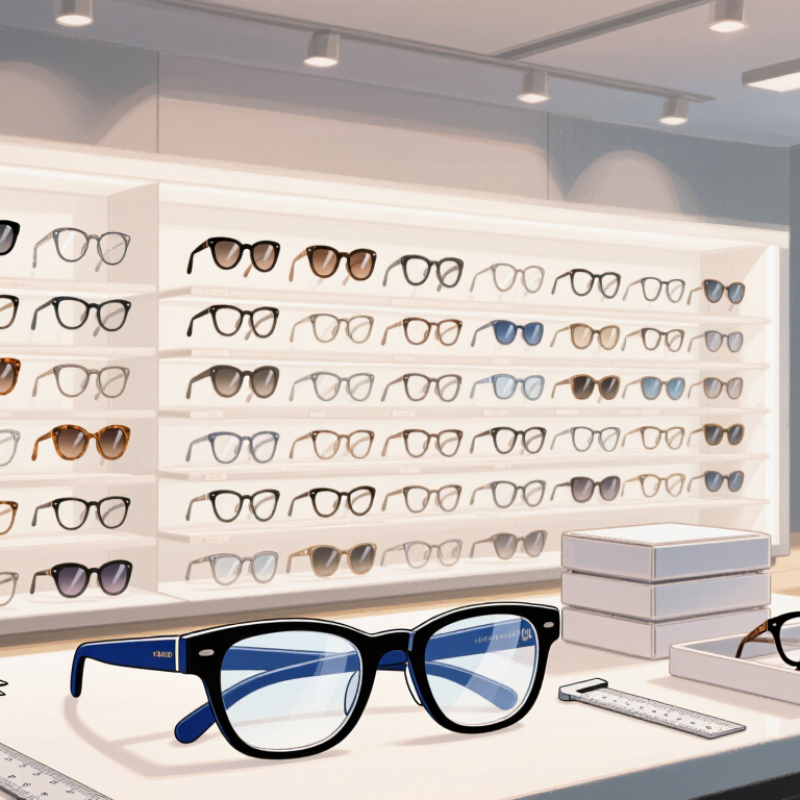
Modern optical collections in China’s wholesale market reflect practical demand, varied design preferences, and changing retail seasons. Buyers may find lightweight acetate styles, slim metal frames, clear lenses, and geometric shapes within one sourcing range. That variety helps. It also makes comparison harder. A polished product photo rarely shows hinge tension, frame balance, or how a nose bridge feels after hours of wear. Requesting samples and checking measurements can reveal issues before a larger order is placed. Small details matter.
Wholesale evaluation should cover more than appearance. Ask for material specifications, lens options, size charts, packaging details, and written quality checks. Confirm whether quotations include customization, sample fees, and shipping, since prices may differ in scope. For repeat orders, compare new goods with an approved sample and record changes in color, finish, or dimensions. Communication deserves attention. A confident response is not proof of consistent production; clear records and realistic lead times are more dependable. No supplier can remove every risk. A frame that looks striking on screen may still feel too heavy for daily wear.
A dependable optical collection starts with clear categories: full-rim acetate, lightweight metal, semi-rimless, and flexible everyday frames. Grand View Research estimated the global eyewear market at USD 161.61 billion in 2022, projecting 8.3% annual growth through 2030. This broad market figure is not a prescription-frame forecast, but it signals substantial demand across eyewear. For wholesale buyers, varied shapes and sizes matter more than one fashionable silhouette.
Design details affect comfort at the counter. Acetate frames offer visible color depth and thicker temples; metal styles can create a finer profile, with adjustable nose pads for more precise fitting. Check hinge movement, temple pressure, bridge width, and lens opening before approving samples. Fit matters. A lightweight frame can still slide on a narrow bridge. Not every slim design feels secure.
The World Health Organization’s World Report on Vision states that at least 2.2 billion people have near or distance vision impairment, with at least 1 billion cases preventable or unaddressed. This is not a direct measure of frame demand, but it underscores the importance of practical vision care. Collections should include understated daily shapes, larger lens openings, and durable finishes. Small details count. Color matching can vary between batches, so inspect production samples under neutral light. That step is easy to overlook.
| Product Category | Common Materials | Typical Size Format | Key Design Features | Lens Compatibility | Wholesale Assortment Considerations |
|---|---|---|---|---|---|
| Full-Rim Acetate Optical Frames | Cellulose acetate; some styles use metal core wires in the temples | Often shown as eye size–bridge–temple length, for example 52–18–140 mm | Bold rims, layered colors, polished surfaces, and varied shapes such as square, round, and cat-eye | Suitable for many single-vision and multifocal prescriptions; lens suitability depends on frame dimensions and prescription | Offer a balanced mix of classic shapes, contemporary colors, and several fit options |
| Metal Optical Frames | Stainless steel, monel alloys, or other frame-grade metal alloys | Common eye sizes are approximately 48–56 mm; bridge and temple lengths vary by model | Slim profiles, adjustable nose pads on many designs, and finishes such as polished, brushed, or matte | Compatible with a broad range of prescription lenses when the frame and lens specifications are appropriate | Useful for lightweight everyday assortments; include different bridge designs and temple lengths for fit variety |
| Titanium Optical Frames | Titanium or beta-titanium components | Typically available in compact to medium eye sizes, with model-specific measurements | Lightweight construction, corrosion resistance, and minimal profiles; beta-titanium may provide added flexibility | Suitable for prescription lenses; confirm rim and lens requirements for each frame construction | Position as a lightweight premium-material option and verify material specifications with the manufacturer |
| TR-90 Full-Rim Frames | Flexible thermoplastic materials commonly identified as TR-90 or similar polyamide-based materials | Frequently offered in small, medium, and large fits; exact measurements are model-specific | Lightweight feel, flexible construction, and casual or sport-inspired shapes | Many designs accept prescription lenses; check the manufacturer’s lens and fitting guidance | Consider a range of adult sizes and colors; avoid treating flexibility as a substitute for fit testing |
| Semi-Rimless Frames | Metal or composite upper rims with a nylon lens-retaining cord | Often uses medium eye sizes; bridge and temple dimensions vary by design | Open lower lens edge creates a lighter visual appearance; cord condition and mounting quality are important | Lens edge must be suitable for the frame’s grooved mounting system; confirm compatible lens materials and thickness | Check cord replacement availability and include clear instructions for lens mounting and maintenance |
| Rimless Optical Frames | Metal bridge and temples with lens-mounted hardware | Measurements are model-specific; lens shape and drilling positions affect the finished fit | Minimal frame appearance, exposed lens edges, and low visual coverage | Requires lenses and mounting that meet the design’s drilling and thickness requirements; not every lens material is suitable | Review hardware, replacement parts, and assembly instructions before selecting models for bulk orders |
| Clip-On Optical Sets | Optical frame in acetate or metal, paired with a detachable tinted clip | Clip dimensions must match the corresponding frame model | Removable front clip, often secured with magnets or mechanical attachment points | Prescription lenses fit the optical frame; the clip’s tint and UV specifications should be checked separately | Keep each clip paired with its compatible frame and verify attachment strength and lens coverage |
Specifications and size ranges are typical examples only. Actual materials, measurements, lens limits, and available configurations vary by model and should be confirmed with the manufacturer before ordering.
Chinese optical suppliers may manage frame production, lens processing, or both, depending on their facilities. A typical frame workflow includes cutting or molding, shaping, polishing, and hinge assembly. Acetate frames may be cut from colored sheets, while plastic frames are often injection-molded. Metal styles need careful soldering and finishing. Small details matter: uneven hinges can make a frame sit crooked. It happens.
Lens work may be handled in-house or by a specialist partner. Suppliers can edge lenses to match frame measurements and apply requested coatings. Buyers should confirm material, prescription range, tint, and coating requirements before approving production. A clear technical drawing helps prevent costly misunderstandings. Ask which steps happen at the factory and which are subcontracted.
Sourcing also shapes consistency. Suppliers may purchase acetate, metals, screws, nose pads, and packaging from different vendors, so material records and incoming checks are useful. Request samples, inspect dimensions, and test hinge movement before placing a larger order. Compare samples against written specifications, not memory. Production checks can include frame alignment, surface finish, lens fit, and packaging condition. No checklist catches everything. I would still recheck a sample after revisions; details that seem minor on a desk can feel obvious when worn.
Lens material is one factor suppliers consider when sourcing and manufacturing optical products. The chart compares typical refractive-index values; exact values may vary by product formulation.
Higher refractive index can allow a lens to be made thinner for a given prescription. Material choice also depends on factors such as impact resistance, weight, and the intended product use.
China Best Modern Optical Collections Wholesale Supplier
Criteria for Evaluating a Wholesale Optical Supplier
A strong wholesale supplier should offer more than a large catalog. Check frame measurements, materials, hinge construction, and lens options against your customers’ needs. Ask for a sample and inspect its finish under ordinary shop lighting. Look for uneven edges, loose hinges, or markings that differ from the product details. Small flaws matter. They can become costly when repeated across a full order.
Consistency is just as important as style. Ask how the supplier checks products between production runs and what happens when a shipment arrives with defects. Request clear details on minimum order quantities, lead times, packaging, and replacement terms. Written answers are useful, but a sample from a later batch may reveal more. Even a neat comparison sheet can miss a change in materials. Recheck important details before confirming a large purchase.
Reliable communication is practical evidence of service quality. Notice whether questions receive specific answers, especially about stock, measurements, and delivery estimates. Ask for relevant quality documents or inspection records, then verify that they match the products offered. Compare total costs, including freight and packaging, rather than focusing only on unit price. A low quote may still fit your budget, but only if quality and delivery expectations are realistic. Supplier evaluation is never perfect; leave room to review early orders before expanding them.
China Best Modern Optical Collections Wholesale Supplier
A reliable wholesale order starts with clear specifications. Buyers should confirm frame dimensions, materials, lens options, color codes, packaging, and quantities before production begins. A signed sample helps both sides check fit and finish. Small details matter: hinge movement, smooth edges, and consistent color under neutral lighting. I have seen a minor specification mismatch delay an otherwise sound order. It is worth checking twice.
Quality control should happen at several stages, not only before dispatch. Suppliers can inspect incoming materials, review production samples, and check finished goods against an agreed checklist. The World Health Organization’s World Report on Vision estimates that at least 2.2 billion people have near or distance vision impairment. That figure reflects broad vision-care needs, not a forecast for any single eyewear category. Still, it underlines why accurate product information and dependable inspection matter. No checklist catches everything.
For delivery, confirm carton counts, shipping documents, tracking details, and the expected dispatch window. The World Bank’s 2023 Logistics Performance Index assessed logistics across 139 countries, examining areas such as customs, tracking, and timeliness. Buyers can use those factors when comparing routes and planning buffer time. A shipment may leave on schedule and still face delays. Keep communication open, and record any discrepancy as soon as cartons arrive.
Buyers may find lightweight acetate frames, slim metal designs, clear lenses, and geometric shapes. Variety helps, but comparisons take time.
Confirm frame dimensions, materials, lens options, color codes, packaging, and quantities. Put the specifications in writing.
Photos cannot show hinge tension or frame balance. A sample lets you check fit, edge smoothness, and comfort in your hands.
Check hinge movement, smooth edges, and consistent color under neutral lighting. Inspect materials, production samples, and finished goods. No checklist catches everything.
Ask whether customization, sample fees, and shipping are included. Two prices may cover different things, so a quick comparison can mislead.
Compare each new batch with an approved sample. Record changes in color, finish, and dimensions. I would still recheck the sample; records can miss small differences.
Confirm carton counts, shipping documents, tracking information, and the expected dispatch window. Leave buffer time because shipments can face delays.
Use clear records, realistic lead times, and open communication. Inspect cartons when they arrive and report discrepancies promptly. Some uncertainty remains.
Modern optical collections wholesale in China cover a wide range of eyewear, including prescription frames, sunglasses, and practical accessories. Buyers can compare materials, shapes, finishes, and fit to select collections suited to different customer preferences and price points. Contemporary designs often balance appearance with comfort and durability, while product options may include lightweight frames, flexible hinges, and varied lens choices.
Chinese suppliers may combine local sourcing with established manufacturing processes to produce and assemble optical products. When evaluating a wholesaler, buyers should consider product consistency, material information, customization options, communication, and the supplier’s quality-control practices. A typical wholesale order involves confirming specifications, quantities, pricing, samples, and packaging before production. Inspection at key stages, clear shipping arrangements, and realistic delivery timelines can help buyers manage orders smoothly and build reliable supply relationships.