
Partnership desk+971 50 359 50 86
Partner Enquiry Choosing Contemporary optical frames wholesale is not simply a matter of buying more styles at a lower unit cost. It is a way to shape a collection around fit, materials, price points, and the customers who actually visit your store. The World Health Organization’s World Report on Vision (2019) estimates that at least 2.2 billion people worldwide have near or distance vision impairment; at least 1 billion cases were preventable or remain unaddressed. That figure does not predict frame sales. It does, however, underline why accessible, well-fitting eyewear matters.
Industry data helps retailers make more grounded decisions. The Vision Council’s market research and Consumer inSights reports track U.S. eyewear purchasing behavior, offering useful context for assortment and consumer preferences. Wholesale buyers can use such findings alongside their own sales records: which colors move, which bridge shapes fit local customers, and which price points sit too long on the shelf. Small details count. A lightweight acetate frame, a flexible temple, or a clear size label can influence both comfort and the buying experience. Still, research has limits; a national trend may not match one neighborhood. Treat reports as guidance, then test modest orders and review sell-through. The strongest wholesale choice is not always the trendiest one. It is the collection your customers will wear.
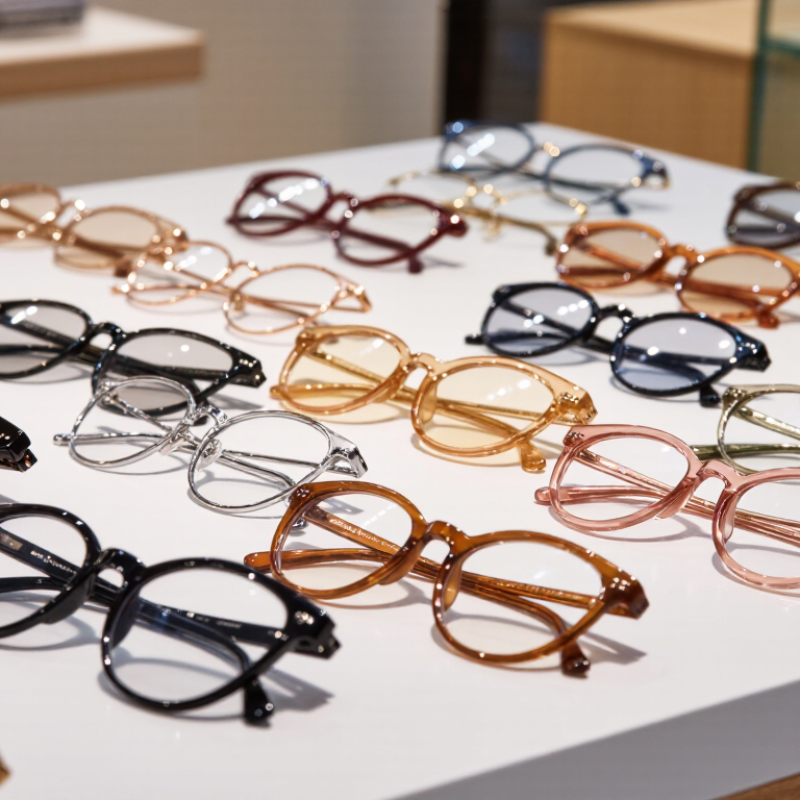
Contemporary optical frames are defined by current proportions, practical comfort, and considered details—not by one fashionable shape. A slim metal rim can feel current, while a softly squared acetate front may offer a bolder look. The design should also support accurate lens placement, with enough depth for prescription lenses and a bridge that sits securely without pinching. Fit matters.
Materials influence both appearance and daily use. Lightweight metal can reduce pressure for some wearers, while acetate offers more visual volume and a broad range of finishes. Smooth edges, aligned hinges, and temples that rest evenly behind the ears are useful signs of careful construction. Small details count. A frame can look polished on a display but feel unbalanced after several hours.
For wholesale buyers, contemporary style also means selecting shapes and sizes that suit varied face widths and prescription needs. A coordinated range might include narrow, medium, and wider fits, rather than repeating one silhouette in different colors. Still, “contemporary” can become a vague label; trends change, and a striking frame may not work for every wearer. Reviewing measurements, hinge movement, finish consistency, and real-world fit helps make the term more meaningful.
| Dimension | What Defines Contemporary Optical Frames? | Why It Matters for Wholesale Buyers | What to Check Before Ordering |
|---|---|---|---|
| Shape and proportions | Current designs range from clean rectangular and round profiles to geometric and softly oversized shapes. Frame proportions affect both appearance and how the eyewear sits on the face. | A considered mix of shapes can serve customers with different style preferences and face proportions. | Review the frame front width, lens width, bridge width, and temple length. Check measurements against the intended customer range. |
| Materials | Common frame materials include cellulose acetate, stainless steel, and titanium. Each has different properties for weight, flexibility, finish, and construction. | A range of materials gives buyers options across different design preferences and price positions. | Confirm the stated material, component details, finish, and care guidance. Material properties can vary by grade and frame construction. |
| Color and finish | Contemporary collections may combine classic neutrals with transparent, translucent, or more vivid colors, as well as matte or polished finishes. | Color variety can help create a balanced assortment without relying on a single look. | Check actual product images or samples where possible; screen color may not accurately represent the finished frame. |
| Fit and adjustability | Fit depends on the frame’s dimensions, bridge design, temple shape, and how those features suit the wearer. Some frames can be adjusted by an eyewear professional, depending on their materials and construction. | Fit information supports better assortment planning and helps reduce avoidable customer dissatisfaction. | Request complete sizing details and confirm whether the frame design is intended for adjustment by a qualified professional. |
| Prescription-lens compatibility | Optical frames are designed to hold prescription lenses, but lens suitability depends on the frame, lens prescription, lens material, and fitting requirements. | Clear compatibility information helps retailers select frames appropriate for their customers’ prescription needs. | Confirm lens dimensions, frame construction, and any restrictions with the supplier or dispensing optician before purchase. |
| Wholesale assortment | Wholesale purchasing allows buyers to source multiple styles or quantities through a supplier’s wholesale terms. Minimum order quantities and available stock vary. | Ordering in larger quantities may change the per-unit cost, depending on the supplier’s pricing, order size, and terms. | Compare minimum order quantities, pricing, stock availability, delivery timelines, payment terms, and return conditions. |
| Quality and construction | Hinge type, alignment, surface finish, and the consistency of assembly are practical indicators to assess when evaluating optical frames. | Consistent construction can make it easier to maintain a dependable assortment across different styles. | Inspect samples for smooth hinge movement, even finishing, secure components, and alignment. Ask how quality issues are handled. |
| Collection planning | A contemporary collection can balance everyday shapes, distinctive designs, varied materials, and a range of colors. | A planned assortment can offer customers meaningful choice while helping buyers manage inventory across different styles. | Use sales history and customer preferences to guide quantities; avoid assuming that every style or color will sell at the same rate. |
Lightweight materials, flexible hinges, and varied bridge widths can improve comfort during commutes and long screen sessions. Looks are not enough.
Try frames on different faces and check whether the bridge sits securely. A frame may feel fine briefly, then pinch after lunch.
Ask about inspection steps, minimum order quantities, production times, and reorder availability. Specific answers matter.
Samples reveal hinge resistance, uneven edges, alignment, and finish issues that photos can miss. Touch matters.
Open and close each temple, check the surface finish, and place frames on a flat counter. They should sit level. Not every flaw is obvious.
Offer different sizes, silhouettes, and price points, with lens-compatible designs. Keep everyday needs in view, not only current styles.
Compare sample quality, lead times, packaging, and support together. A low price can hide trade-offs; a high price proves little.
Find out who handles concerns, what evidence is needed, and how replacements work. Vague replies worry me, though they are not proof of poor service.
Contemporary optical frames combine current design with practical features for daily wear. Clean lines, balanced proportions, and a range of colors and materials give wearers options to suit different preferences, while comfort, durability, and a secure fit remain essential. Thoughtful frame design can also accommodate different lens needs without sacrificing style, making modern eyewear both functional and versatile.
Choosing Contemporary optical frames wholesale can help buyers access a broader selection and manage purchasing costs, particularly when stocking varied styles and sizes. Before placing an order, evaluate frame construction, material quality, finishing, fit options, and the consistency of the available assortment. It is also important to consider a supplier’s communication, product information, ordering process, and ability to provide reliable service. Comparing these factors helps buyers select frames that meet customer needs and support a well-rounded eyewear collection.