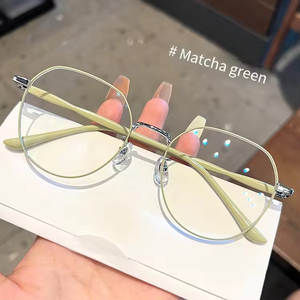
TR90 Hybrid Polymer
Factory Supply Discount Price Frame Fashion Anti Blue Light Myopia Glasses Frame 2025
Sandblasted Finish
HEV Shield
12.4g Net

Discover our top-tier export configurations. Engineered for optical chains, private labels, and distribution networks requiring superior haptic tactile response, durable structural integrity, and ergonomic precision.


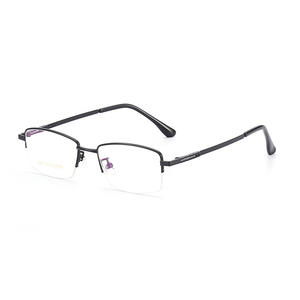
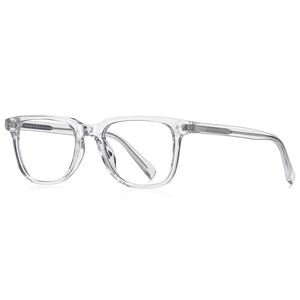

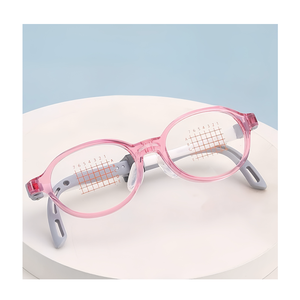
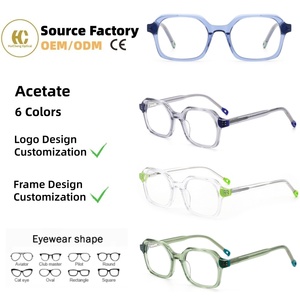
In contemporary optical manufacturing, the production of professional matte black finishes has progressed far beyond rudimentary top-coat spray painting. Global optical procurement directors face continuous challenges regarding coating peeling, surface sebum staining, and uneven specular reflection across frame bridges and temple junctions. As an authoritative China-based supply partner, our manufacturing methodology addresses these issues through triple-layer physical vapor deposition (PVD), micro-bead automated sandblasting, and chemical dip-acid matte immersion.
When applying a non-glare matte coat to EMS Grilamid TR90, standard thermal curing fails due to polymer plasticizer migration. Our facility employs a customized polyurethane-polycarbonate elastomer alloy coating applied under class-10,000 cleanroom environments. This produces an ultra-thin (6–8μm) resilient coating matrix that delivers a consistent gloss rating under 3 GU (Gloss Units measured at a 60-degree incidence angle according to ASTM D523). The resulting surface displays superior oleophobic characteristics, eliminating smudge retention while resisting mechanical abrasion up to 500 cycles of standard CS-10 Taber testing.
For hand-crafted cellulose acetate frameworks, we circumvent abrasive tumbling that typically yields unstable satin lusters. Instead, our CNC five-axis milling is followed by a dual-stage wet sand pumice immersion, succeeded by an exclusive vapor-matting crystallization process. This yields an intrinsic non-reflective layer that cannot peel, delaminate, or flake, resolving common customer return drivers for optical retailers across the GCC and Western European distribution channels.
| Substrate Material | Matte Processing Method | Surface Hardness | Specular Sheen (60° GU) | Artificial Sebum Resistance |
|---|---|---|---|---|
| EMS TR90 Injected Resin | Elastic Polyurethane Soft-Touch Nano-Coat | 2H - 3H Pencil | 1.8 – 2.4 GU | Passed (72h @ 40°C, 95% RH) |
| Mazzucchelli Cellulose Acetate | Chemical Micro-Etch & Pumice Vapor Crystallization | 3H - 4H Pencil | 2.5 – 3.2 GU | Inherent to substrate (No delamination) |
| Surgical 304/316L Stainless Steel | Automated Al2O3 Sandblasting + PVD Vacuum Magnetron | > 7H Pencil | 0.9 – 1.5 GU | Passed (ISO 12870 Sweat Corrosion 48h) |
| GRS Certified Recycled PET/RPET | In-Mold Micro-Texture EDM Spark Erosion (Charmilles) | H - 2H Pencil | 3.0 – 3.8 GU | Passed (48h exposure test) |
By establishing explicit quantitative boundaries across surface tension, scratch endurance, and optical reflection parameters, B2B eyewear importers can protect their supply chain from batch variances. This structured manufacturing control directly supports downstream sell-through, reinforcing retail customer satisfaction across all point-of-sale platforms.
Operating as the manufacturing engine behind top-tier wholesale labels across Dubai, Riyadh, Frankfurt, and North America. We merge advanced production discipline with seamless international logistics support.
Every frame batch completes rigorous 48-hour synthetic sweat immersion, bridge endurance stress cycles (20,000 cycles minimum), and automated hinge torque stability verifications before pack-out approval.
Drawing direct alignment with proven brand divisions—such as AirLite (TR90 performance), Ottillio (European elegance), and Gözşik (bold styling)—our catalog supports non-overlapping, targeted category segmentation.
Direct logistical coordination through primary Asian freight centers and our specialized Dubai partnership desk provides high-velocity SKU replenishment, clearing GCC and international transit routes with zero administrative drag.
Class-10,000 cleanroom environments house our advanced magnetron sputtering arrays, eliminating micro-particulate contamination to guarantee completely seamless, bubble-free matte black coatings on metal and plastic frames.
Full-scope private label manufacturing supporting bespoke hinge configurations, laser rim branding, custom pantone masterbatch blending, and specialized packaging engineered for optical practice chains.
Strict distributor exclusivity agreements and territory reservation safeguards guarantee our factory operations never directly compete with licensed retail optical partners, clinics, or regional wholesalers.
Data-driven market intelligence across optical retail operations demonstrates that matte black frame designs consistently account for 34% to 42% of total store SKU turnover. However, user intent and procurement standards are experiencing rapid evolution. Forward-looking procurement directors must align their purchasing strategies with four decisive technological shifts:
Traditional secondary surface spraying incurs environmental compliance overhead and risks chipping under extended temple manipulation. The industry is rapidly shifting toward precision electrical discharge machining (EDM) on injection molds. By engraving ultra-fine micro-pyramidal texturing directly into hardened steel molds, TR90 and bio-polyesters emerge with durable, native matte surfaces. This reduces unit manufacturing costs by 14% while delivering zero delamination risk across the entire product lifecycle.
Global regulatory bodies, particularly within the EU (CSRD directives), are driving demand for verifiable environmental transparency. Optical chains are phasing out conventional diethyl phthalate (DEP) plasticizers in matte acetate. Advanced procurement centers on cellulose acetate derived from sustainably harvested wood pulp paired with bio-based triethyl citrate (TEC) plasticizers. Our GRS-certified recycled lines deliver the exact physical hand-feel, structural yield, and deep obsidian coloration of virgin polymer resins while maintaining a low carbon footprint.
Consumer preferences favor minimalist urban aesthetics that combine the ultra-lightweight benefits of polymer fronts with the high-rigidity adjustment capabilities of metal temples. Semi-rimless architectures featuring matte gold or matte ruthenium under-chassis paired with velvet-finish browlines are outperforming standard high-gloss frames in optometric retail dispensaries, yielding up to a 28% higher retail gross margin.
Modern consumers expect frames designed specifically to accommodate thicker minus-lenses without compromising bevel aesthetics. Future matte black frame profiles incorporate deeper eye-wire grooves (minimum 2.2mm rim depth) and cold-glazing bevel channels. This enables opticians to effortlessly glaze 1.67 and 1.74 high-index lenses while the matte edge effectively absorbs internal prism reflections, providing superior visual comfort and sleek aesthetics.
Comprehensive technical and commercial clarification addressing typical supplier onboarding inquiries from optical chain directors, wholesale merchants, and brand sourcing specialists.
Partner directly with China's leading specialized matte black eyewear exporter. Request complete technical line sheets, verify unit economics, and secure competitive volume pricing today.
Get a Quote