
Partnership desk · Dubai (GST) B2B only — licensed optical retailers & distributors
English العربية

China Best Vintage Eyewear Wholesale Manufacturer & Factories

B2B Sourcing Playbook, Industrial Cluster Insights & Global Supply Chain Economics

Factory Direct Catalog

High-Turnover Vintage Optical & Sunglass Lines

Curated retro architectures engineered for commercial optical dispensary walls, private label brands, and multinational wholesale distribution networks.
1,500+
Active Frame Toolings
99.4%
QC Pass Rate (AQL 1.0/2.5)
15-35
Days Rapid Turnaround
65+
Export Markets Served
Industrial Supply Chain Analysis

Decoding China's Vintage Optical Manufacturing Ecosystem

Strategic geographic mapping for B2B procurement managers seeking optimal balances of cost, engineering tolerances, and artisanal craftsmanship.

1. The Geographic Taxonomy of Chinese Eyewear Production

Global wholesale sourcing of vintage optical frames requires an acute understanding of China's regional specialization clusters. Optical engineering is not monolithic; each industrial hub maintains distinct cost drivers, minimum order quantities (MOQs), and engineering competencies:

  • Shenzhen (Henggang District): Renowned as the world center for high-end optical fabrication. Shenzhen facilities produce luxury handcrafted cellulose acetate, high-grade titanium rimless architectures, and artisanal filigree engravings. Boasting average tolerances within ±0.05mm, it serves elite European and Japanese boutique optical houses.
  • Wenzhou (Ouhai District): The global powerhouse for mid-tier fast-turnaround metal, TR90 injection, and hybrid spectacles. Wenzhou accounts for tremendous volume efficiencies, mature supply chains for surface electroplating, and standard barrel hinges, ideal for mid-market optical retail chains.
  • Danyang (Jiangsu Province): The undeniable global capital of ophthalmic optics, producing over 40% of the world's corrective lenses. Danyang's frame ecosystem excels in budget-to-mid prescription wireframes, reading spectacles, and rapid lens edging integration, optimizing total unit costs through co-located frame-lens logistics.
  • Xiamen & Taizhou: Specialized hubs for performance injected polymers, polycarbonate sun lenses, and injection molded sunglasses meeting ANSI Z80.3 and EN ISO 12312-1 standards.

Material Metallurgy

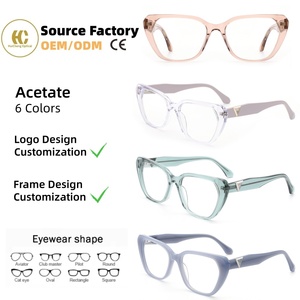
We deploy high-density Mazzucchelli-grade cellulose acetate alongside Japanese β-titanium and corrosion-resistant German silver monel, eliminating copper dermatitis risks.

Tumbling & Polishing Cycles

Unlike rapid flash-dipped frames, our vintage acetate lines undergo 72-hour multi-stage barrel tumbling in walnut shells and pumice stone, followed by manual hand-wheel polishing.

Precision Tooling & Hinges

Vintage mechanics demand durability. We implement custom riveted 3-barrel, 5-barrel, and 7-barrel custom hinges, tested to withstand over 25,000 cyclical fatigue flexes.

Procurement Intelligence

Emerging B2B Sourcing Trends in Vintage Optical Ware

Actionable data and technical shifts driving international inventory turnover for modern independent distributors and optical retail groups.

Bio-Based & Circular Materials

Regulatory scrutiny (EU Green Claims Directive) is phasing out petroleum plasticizers. Leading procurement channels are transitioning to bio-acetate (synthesized with bio-based diethyl phthalate replacements) and Global Recycled Standard (GRS) certified rPET and recycled brass hardware.

Sub-Millimeter Ergonomics

The standard "Western bridge" no longer addresses global demographics. Advanced factories build parametric tooling providing alternate "Universal Fit" and elevated silicone saddle bridges designed for low-bridge, high-cheekbone facial morphologies across Asia and the Middle East.

Heritage Meets Blue-Light & Transitions

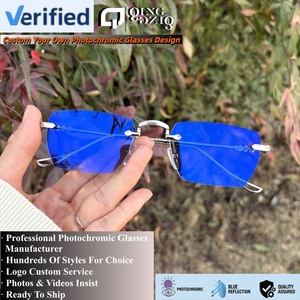
Vintage silhouettes (Panto, Windsor rims, bold 1950s square browlines) are being infused with functional blue-blocking substrates and rapid-activation photochromic lenses (clear indoor to Category 3 UV activation), catering to prolonged digital screen exposure.

Design Engineering Evolution

Macro Aesthetics: From Historical Archive to High-Volume Commercial Racks

How authentic vintage silhouettes have evolved to satisfy contemporary mechanical rigidity, optical dispensary mounting, and wearer comfort.

Structural Evolution: 1930s-1980s Retro Re-Imagined

Procuring vintage eyewear requires an appreciation of engineering nuances. True historical spectacles were often heavy, structurally brittle, and ergonomically rigid. Modern OEM/ODM manufacturing reconstructs archival silhouettes using cutting-edge metallurgical and material science:

  • The 1930s "Windsor Rim" & Wire Architecture: Historically manufactured with brass and nickel plating prone to skin oxidation, modern China tier-1 manufacturing utilizes Japanese Grade-A Titanium or CNC-milled stainless steel with PVD vacuum titanium ion-plating, delivering unblemished hypoallergenic surfaces and high spring-memory flexibility.
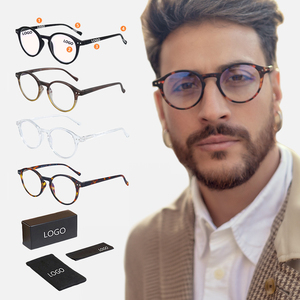
  • The 1950s Heavyweight Panto & Browline: Archival frames relied on volatile cellulose nitrate (celluloid), highly flammable and prone to yellowing. Current production uses stabilized, seasoned cellulose acetate dried for 90 days in thermal control kilns to eliminate internal moisture stress, preventing bridge warpage when mounting progressive prescription lenses.
  • The 1970s Aviator & Double-Bridge Geometries: Once plagued by weak sweat-bar solder joints, modern factory robotics utilize precision high-frequency induction silver soldering and laser micro-welding, resisting solder joint failure up to 350 N tensile force.
  • 1980s Oversized Geometric Profiles: Heavy vintage profiles cause temple bite and bridge indentation. Modern engineering implements thin-bevel step cutting and internal frame-hollowing techniques, reducing gross frame weight by up to 38% while maintaining authentic front-profile visual chunkiness.
Competitive Advantage

Enterprise Advantages: Engineering Rigor & Regional B2B Synergy

Combining world-class Chinese industrial manufacturing muscle with Dubai-based regional headquarters coordination for unmatched commercial velocity.

Dual-Node Global Fulfillment

Seamlessly operating production lines in certified Chinese eyewear hubs, paired with our strategic Dubai Partnership Desk located at Al Khabaisi, Deira. Optical buyers across GCC, MENA, and Europe receive rapid sample dispenses and low-latency wholesale deliveries.

Triple-Brand Assortment Strategy

Eliminate wholesale inventory cannibalization. We provide structured brand wall positioning: AirLite (Turkish engineered lightweight TR90), Ottillio (Refined French luxury aesthetics & Mazzucchelli acetate), and Gözşik (Contemporary statement shapes).

Strict B2B Protection Guarantee

We work exclusively with licensed optometry practices, regional retail groups, and international optical importers. We never operate direct-to-consumer DTC stores or cross-list stock to undercut your retail frame shelf margins.

Procurement Knowledge Hub

Frequently Asked Questions by Professional Eyewear Buyers

Essential guidance on minimums, testing certifications, export tariffs, and custom OEM/ODM manufacturing processes.

What are standard Minimum Order Quantities (MOQs) for custom vintage acetate vs. metal eyewear?
Custom acetate production typically commands an MOQ of 300 to 500 units per model, allowing 2-3 custom colorways. This is driven by cellulose acetate raw material plate manufacturing requirements. For ready-stock catalog models or injected TR90, MOQs can be as low as 50 to 100 units. Bespoke CNC-machined titanium frames generally require 300 pieces due to specialized vacuum electroplating jig capacities.
Which international compliance certifications are mandatory when importing vintage eyewear into North America & Europe?
For the US market, full FDA Registration (Title 21 CFR 801.410 drop-ball impact testing certification for lenses) and Prop 65 toxic chemical compliance are mandatory. For the European Union, frames must comply with the Medical Device Regulation (MDR 2017/745) for ophthalmic prescription frames (Class I medical devices), EN ISO 12870 for frame dimensional stability, and CE/UKCA marking for sun protection under EN ISO 12312-1.
How can optical buyers audit the quality of vintage acetate frames prior to shipment?
We adhere to standard MIL-STD-105E / ISO 2859-1 AQL Level II sampling protocols (Critical 0, Major 1.0, Minor 2.5). Essential quality gate audits include: (1) 48-hour sweat corrosion salt-spray testing, (2) Bridge flex and temple cycle tests (20,000 hinge flexes without hinge screw backing-out), (3) Thermal stability testing at 60°C for 8 hours to ensure zero rim warp or lens displacement, and (4) Cross-cut adhesion testing for pad printing and temple core wire electroplating.
What are typical production lead times for OEM optical orders?
Ready-stock inventory shipping via air cargo from our Dubai or China logistics facilities takes approximately 5–7 business days. For customized OEM/ODM bulk production: tooling and prototype sample sign-off requires 20–25 days; raw material batch seasoning and tumbling requires 30 days; full assembly, electroplating, inspection, and ocean packing completes within 45–60 days from final approved golden sample.
How do you prevent bridge and temple discoloration from facial perspiration?
Discoloration is caused by cheap solvent lacquer finishes and poor base metals reacting with perspiration acids. We employ advanced multi-layer PVD (Physical Vapor Deposition) ion-plating capped with a protective transparent electrophoretic coating (nano-ceramic clear coat), yielding salt-spray resistance exceeding 96 hours without green copper oxidation or surface micro-peeling.
Can optical dispensaries fit progressive and high-index lenses into your vintage full-rim and half-rim frames?
Yes. All optical frame chassis feature precise V-bevel lens grooves engineered to standard optical laboratory base curves (typically 4.00 to 5.00 Base). Eyewire depths and pantoscopic tilt angles (ranging from 8° to 10°) are calibrated specifically to accommodate progressive addition lenses (PAL) and high-index digital free-form lenses up to 1.74 index without unsightly lens edge overhang.

Build a High-Margin Vintage Frame Assortment Today

Partner with an integrated manufacturing powerhouse. Access full technical catalogs, confidential factory line sheets, certified lab compliance dossiers, and wholesale volume tiering.

Inquire Now