Partnership desk+971 50 359 50 86
Partner Enquiry Sourced and assembled across advanced manufacturing ecosystems in Shenzhen and Wenzhou, our commercial men's lines combine high-tensile alloys, virgin TR90 polymers, and impact-certified polycarbonates built to meet stringent CE EN ISO 12870, ANSI Z80.3, and ANSI Z87.1 optical tolerances.
 Metal Optical
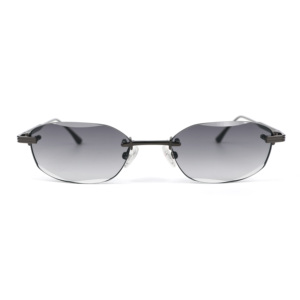 Diamond Cut
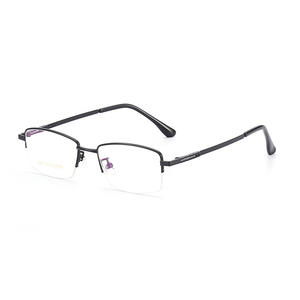 Semi-Rimless
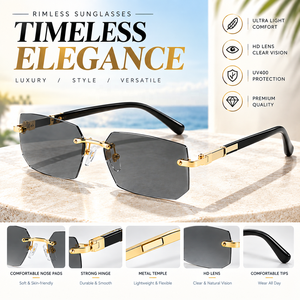 Frameless Retro
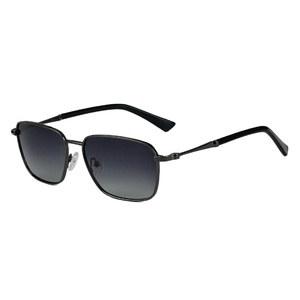 Executive Class
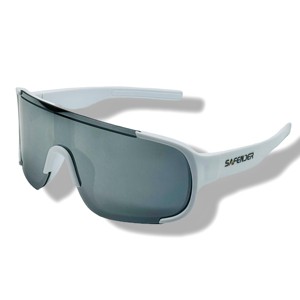 ANSI Z87.1 Certified
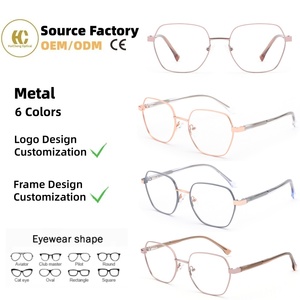 Optical Rx Frame
By synchronizing high-capacity Chinese manufacturing plants with strategically coordinated logistics desks—including our dedicated Middle East & GCC regional center in Dubai—we provide end-to-end assurance from rapid tooling to doorstep bonded delivery.
Drawing on the core design principles of our established brands—such as AirLite for lightweight TR90 engineering, Ottillio for French architectural refinement, and Gözşik for bold contemporary statements—our OEM/ODM lines are tailored for precise demographic targeting without internal SKU cannibalization.
We operate exclusively as a B2B partner for licensed optical chains, regional brand owners, optometrist practices, and mass retail distributors. We never engage in direct-to-consumer (D2C) marketplace selling, ensuring our clients enjoy total margin protection and market pricing autonomy.
Every batch undergoes mechanical stress assessments, including 20,000-cycle bridge flexion endurance, 72-hour neutral salt-spray (NSS) galvanic plating corrosion audits, and nickel release compliance under EN ISO 12870 and BS EN 16128 regulations.
Leveraging 5-axis CNC machining, stereolithography (SLA) 3D prototyping, and dedicated mold-making departments in Shenzhen and Wenzhou, we convert CAD schematics into functional metal or acetate prototypes within 10 to 14 working days.
Our commercial desk coordinates logistics across global time zones. Supporting English and Arabic commercial documentation, our export networks handle air consolidation, sea-container clearance, and GCC customs streamlining through Dubai's regional redistribution hubs.
From high-speed fiber-laser temple engraving and tampography lens imprinting to customized FSC-certified hard cases, microfiber cloths, and serialized barcodes, our factory lines deliver fully retail-ready SKUs optimized for immediate wall display.
The global men's eyewear market has shifted decisively from passive utility toward functional luxury, ergonomic ergonomics, and strict material traceability. In international sourcing markets across North America, Europe, the GCC, and Latin America, procurement directors are re-evaluating supplier matrices. Securing tier-1 manufacturing partnerships in China no longer rests merely on baseline unit pricing; it depends on a factory's engineering precision, compliance pedigree, and modular manufacturing agility.
A sophisticated procurement strategy requires understanding China's localized optical manufacturing ecosystems. Each manufacturing cluster provides distinct comparative advantages:
Professional eyewear procurement requires rigorous testing protocols before bulk container sign-off. Below is our internal inspection matrix executed across every OEM production batch:
| Quality Metric | International Standard | Factory Test Protocol | Commercial Tolerance Threshold |
|---|---|---|---|
| Nickel Release | EN 16128 / EN ISO 12870 | Electrolytic extraction simulation in artificial sweat (pH 6.5) | < 0.5 μg/cm²/week (European REACH Annex XVII compliant) |
| Plating Adhesion | ISO 2409 / ASTM D3359 | Cross-hatch tape-peel adhesion test after 72h NSS chamber exposure | Grade 0: Zero flaking, blistering, or delamination along lattice edges |
| Hinge Endurance | ANSI Z80.5 / EN ISO 12870 | Automated cyclical pneumatic opening and closing (40 cycles/min) | Zero structural loosening or screw back-out after 20,000 cycles |
| Lens Impact (Sports) | ANSI Z87.1 / CE EN166 | High-velocity steel ball (1/4 in at 150 ft/s) point impact testing | No fracture, fragment detachment, or dislodging from retaining bevel |
| Thermal Stability | ISO 12870 Section 4.8 | Dry heat exposure at 60°C ± 2°C for 4 hours continuous duration | Deformation index ≤ 1.5mm; zero surface hazing or crazing |
Material engineering remains the primary differentiator in end-consumer sell-through and reduced retail return rates. Sourcing managers must evaluate raw component compositions:
Cellulose Acetate vs. Injection Plastics: Commercial buyers must distinguish between low-cost CP (Cellulose Propionate) and Mazzucchelli-grade Cellulose Acetate. High-grade acetate is cured for up to 90 days to prevent post-production temple warpage, allowing opticians to safely cold-glaze optical prescription lenses into the frame grooves without cracking the rims.
Titanium Grades: While standard commodity suppliers offer basic copper-nickel alloys, premium men's frames require Pure Titanium for frame fronts (providing superior stiffness and hypoallergenic safety) paired with Beta-Titanium temples (offering exceptional elasticity to comfortably accommodate diverse cranial widths without manual temple adjustments).
TR90 Compounding: Virgin EMS Grilamid TR90 polymers imported from Switzerland deliver unmatched flexibility, high thermal resistance (preventing distortion in hot automotive dashboards), and featherweight comfort—typically weighing under 12 grams per bare frame. This makes them ideal for everyday optical wearers and high-rotation retail programs.
Anticipate shifting consumer expectations and evolving international supply chain demands with these strategic procurement imperatives for brand executives and retail buyers.
Regulatory frameworks like the EU Corporate Sustainability Due Diligence Directive are accelerating the transition toward bio-acetates derived from renewable cotton linter and wood pulp, plasticized with bio-based phthalate-free agents that decompose within 180 days under industrial composting conditions.
Men's optical and sunwear profiles are shifting from conventional soft ovals toward structured octagonal, hexagonal, and thick-milled (6mm to 8mm) acetate silhouettes with multi-faceted diamond-cut edges that communicate assertive luxury and executive presence.
Combining aircraft-grade titanium chassis with genuine carbon-fiber temple arms creates frames that are 40% lighter than standard brass-alloy counterparts, while delivering exceptional tensile strength and modern industrial aesthetics.
Savvy retail chains are moving away from monolithic seasonal buy cycles. Instead, they leverage hybrid models: holding finished, unbranded core frames in factory bonded warehouses, then adding private-label laser branding on demand for swift 10-day replenishment runs.
Anticipating mandatory international customs traceability, forward-thinking manufacturers now integrate laser-etched micro-QR codes inside frame temples to document raw material origins, carbon footprint audits, and ISO certification records directly for customs brokers.
The boundary between dedicated sunglasses and daily prescription frames continues to dissolve. High-retention optical retail walls increasingly emphasize light-reactive lenses that transition from crystal-clear indoor optics to deep category-3 UV400 outdoor protection.
Clear, definitive answers to help retail store directors, supply chain leads, and optical distributors navigate custom OEM manufacturing, lead times, and logistical compliance.
Consult directly with our technical engineering desk to evaluate CAD files, request sample kits, or discuss turnkey private label production runs for your chain.