Metal Alloy • OEM/ODM
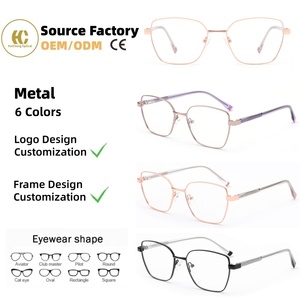

Precision-milled rims, vacuum-ion physical vapor deposition (PVD) finishes, reinforced barrel hinges, and ergonomic bridge profiles calibrated for high-index prescription glazing and maximum customer sell-through.

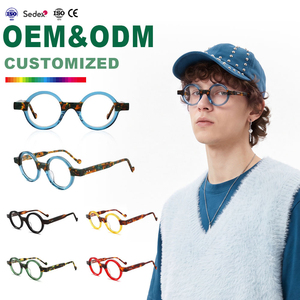


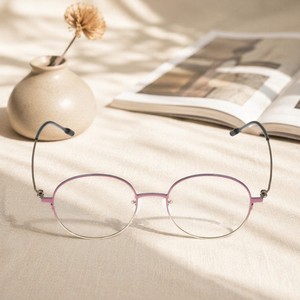
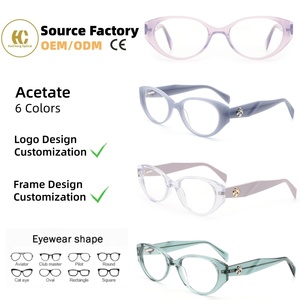
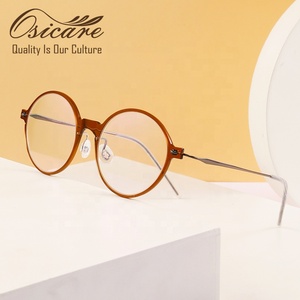
A comprehensive procurement guide covering dimensional tolerances, metallurgy, organic polymer chemistry, and automated robotic finishing for international optical professionals.
CNC Milling Precision
Hinge Flex Cycle Tests
NSS Salt-Spray Plating Test
ISO 12870 & CE Compliant
The global renaissance of the circular optical silhouette—spanning the historic P3 (Pantoscopic 3-degree tilt) geometry, pre-war round wireframes, and modern bold sculptural rounds—represents one of the most commercially profitable and technically demanding categories in prescription eyewear. Unlike rectangular or soft-square frames where minor axis asymmetries can be easily disguised by progressive edge bevels, circular optical eyewires require micro-metric symmetry. A deviance of even 0.05 mm in the eyewire curvature can result in lens push-out under thermal expansion, axis misalignment of astigmatic cylinders, or unwanted prism induce when high-index prescription lenses are edged into place.
As premier Chinese wholesale round optical frame manufacturers based across the primary industrial clusters of Wenzhou, Danyang, and Shenzhen, our production engineering integrates German 5-axis CNC high-speed machining centers with traditional artisan wet-tumbling. We process premium cotton-linter cellulose acetate slabs (aged minimum 60 to 90 days to release internal volatile plasticizers and eliminate post-assembly warpage) alongside Japanese Beta-Titanium alloys (Ti-15V-3Cr-3Sn-3Al) capable of delivering high elastic memory at a featherlight specific gravity of 4.51 g/cm³.
For brand purchasing directors and chain optical managers navigating international sourcing, partnering with an authentic tier-1 Chinese factory unlocks decisive advantages. Beyond standard catalog selection, our OEM/ODM facilities provide complete dimensional customization: temple sweep curve adjustment for regional head shapes, specialized pantoscopic tilt calibration for multifocal digital free-form lenses, and advanced vacuum Ion-Plating (IP) that outperforms traditional wet galvanic coating by over 400% in dermatological sweat-resistance and nickel-leach prevention.
| Material Classification | Specific Density | Tensile Strength | Key Manufacturing Process | Recommended Prescription Range |
|---|---|---|---|---|
| Block Cellulose Acetate | 1.28 - 1.32 g/cm³ | 45 - 65 MPa | 5-Axis CNC Mill, 72h Multi-Stage Pumice & Walnut Tumbling | Plano to -10.00D (Ideal for high edge-thickness concealment) |
| Pure Titanium (Grade 1 / 2) | 4.51 g/cm³ | 240 - 390 MPa | Argon-Shielded Micro Plasma Welding, Vacuum IP Coating | Plano to -6.00D (Ultra-lightweight minimalist aesthetics) |
| Beta-Titanium Alloy | 4.65 g/cm³ | 850 - 1050 MPa | Cold-Rolled Spring Temples, Micro-Laser Filigree Engraving | Plano to -5.00D (High-flex memory, screwless architecture) |
| Medical Grade TR90 (Grilamid) | 1.02 g/cm³ | 70 - 85 MPa | High-Pressure Clean-Room Injection, Soft-Touch Matte UV Coat | Plano to -6.00D (Pediatric, athletic, and high-impact wear) |
| Monel & Cupronickel Alloys | 8.80 g/cm³ | 400 - 550 MPa | Stamping, Induction Soldering, Dual-Layer Protective Lacquer | Plano to -4.50D (Cost-effective fast-fashion commercial lines) |
Actionable data and macro-level forecasts enabling optical enterprises, private label founders, and supply chain managers to capitalize on shifts in materials, demographics, and manufacturing technologies.
Global regulatory pressure, notably EU REACH and corporate ESG commitments, is accelerating the transition toward bio-cellulose acetates plasticized with vegetable-derived diethyl phthalate substitutes. Modern bio-acetates provide identical crystal transparency and deep tortoise mottle patterning while achieving over 80% natural degradation within 180 days under ISO 14855 composting conditions, establishing high-margin retail storytelling.
With global myopia incidence surging—projected by WHO to reach 50% of the world population by 2050—round frames are uniquely suited to ophthalmic ergonomics. Circular geometries minimize temporal lens edge cut-off thickness compared to oversized broad rectangles. Wholesale buyers are increasingly requesting 3.5mm to 4.8mm deep eyewire bevel channels that conceal the thick edges of high-negative powers (-4.00D to -8.00D).
Retail warranty claims and consumer returns in optometric practices are dominated by one culprit: loosened hinge screws. Our manufacturing R&D has successfully industrialized precision interlocking barrel assemblies and cylinder-pivot friction joints that completely eliminate threaded pins. Tested to 50,000 continuous opening cycles without tension loss, these mechanisms represent a prime B2B selling point.
Modern round frames must cater to heterogeneous global demographics. Leading wholesale inventories now implement modified saddle bridges, step-curved keyhole designs, and multi-axis adjustable titanium pad-arms. This enables a single round frame front to sit securely on low-nasal bridges (predominant in East Asia and Latin America) without cheek contact or optical center vertical decentration, maximizing sell-through across multi-channel retail.
B2B optical chains no longer tolerate 120-day production lead times for standard replenishable lines. Forward-thinking Chinese factories are establishing semi-finished blank staging (where acetate and titanium front-rims are stamped, routed, and held in raw inventory). Upon order confirmation, custom PVD plating, laser serialization, and customized private-label pad printing are executed within 15 to 25 business days.
In accordance with the latest FDA Unique Device Identification (UDI) regulations for Class I corrective ophthalmic devices, high-end round frames now incorporate micro-laser etched QR matrices or sub-miniature temple-embedded RFID microchips. This guarantees authenticity, tracks alloy provenance from ingot melt to optometric bench, and simplifies automated inventory auditing for large distribution chains.
Combining verified factory discipline, high-capacity modern tooling, and tailored B2B export support to elevate your optical brand equity.
We do not outsource fundamental tooling. Our internal master mold workshop cuts custom steel stamping dies, rim wire profile extrusions, and injection molds within 10 to 14 days, reducing product development cycles by over 45% compared to trading intermediaries.
Every single production batch undergoes 12 mandatory quality gate assessments: eyewire circumference vernier caliper calibration, temple open-close friction torque evaluation, bridge load deformation tests, cross-hatch lacquer adhesion tests, and 72-hour artificial sweat immersion.
We source authentic cellulose acetate from industry leaders including Mazzucchelli 1849, Jinyu, and Jinmin, alongside medical-grade Grilamid TR90 direct from EMS-Grivory (Switzerland). Mill test certificates and material safety data sheets (MSDS) accompany every bulk container.
Our facilities are fully certified and audited under ISO 9001:2015, ISO 13485 (Medical Devices), CE (EU Medical Device Regulation 2017/745), and US FDA Registration. Seamless customs clearance with complete technical documentation dossiers is standard procedure.
Whether you require custom logo laser marking, micro-diamond temple setting, customized acetates laminated with bespoke colorways, or packaging collections (clamshell hard cases, microfiber cloths, serialized warranty cards), our turnkey OEM service executes to perfection.
We respect the commercial realities of modern optical retail. Alongside container-level custom manufacturing for multi-store chains, we maintain dedicated low-MOQ programs for ready-goods inventory, supporting rapid replenishment and cash-flow efficiency for boutique practices.
Direct technical and operational answers covering production capacity, lens glazing compatibility, custom tooling, sampling, and export logistics.
For custom OEM/ODM production (bespoke acetate colorways, custom metal stampings, unique temple carvings), our typical MOQ is 300 pieces per model, with up to 3 distinct color variations (100 pieces per colorway). For titanium frames requiring custom extrusion tooling, MOQ is 300 to 500 pieces. Conversely, for our ready-to-ship catalog styles shown above, opening wholesale orders start as low as 12 to 50 pieces per style with rapid 48-hour warehouse dispatch.
Yes. Our round optical frame series are engineered specifically with ophthalmic optical laboratories in mind. We maintain a minimum B-measurement (vertical lens height) of 38mm to 44mm across all adult round frames, which comfortably accommodates modern digital progressive addition lenses (PALs) with standard 14mm to 17mm corridor fitting heights. For thick high-negative prescriptions, our 4.0mm to 8.0mm acetate rim collections feature deeply recessed V-grooves (110° to 120° bevel angle) that completely conceal peripheral lens bulge.
All metal components intended for skin contact conform strictly to European Standard EN 1811:2011+A1:2015 (reference test method for release of nickel from all post assemblies inserted into pierced parts of the human body and articles intended to come into direct and prolonged contact with the skin). We utilize advanced Ion Plating (IP) in ultra-high vacuum chambers, applying titanium nitride and zirconium nitride barrier layers followed by real gold, palladium, or ruthenium decorative films, topped with baked cathodic electrodeposition lacquer. Sweat test certification is available per batch.
Upon receipt of your 2D CAD drawings or reference physical sample:
1. 3D computerized optical rendering and dimensional tolerance check: 3 business days.
2. Physical 3D stereolithography (SLA) resin prototype for fitting evaluation: 5 business days.
3. Fully functional hand-crafted acetate/metal prototype sample with actual production materials and trial surface finish: 15 to 20 business days. Bulk tooling commences immediately upon physical sample sign-off.
Every lot is sampled in accordance with ISO 2859-1 (AQL Level II Major 1.5, Minor 2.5). Tests include:
• Bridge Deformation & Retention: ISO 12870 Clause 4.8.
• Endurance Hinge Cycling: Mechanical flex testing to 20,000–50,000 cycles.
• Sweat Resistance: Immersion in artificial perspiration at 37°C for 24 to 72 hours without blistering or discoloration.
• Drop Ball Impact: Lens eyewire retention test under high kinetic impact.
We support Incoterms including EXW, FOB (Ningbo, Shanghai, Shenzhen, Hong Kong), CIF, and DDP (Delivered Duty Paid via air courier for urgent boutique orders). Standard payment terms for custom manufacturing are 30% deposit upon proforma invoice sign-off and 70% balance settled upon final third-party pre-shipment inspection (SGS, TUV, or your own designated inspector) prior to ocean or air dispatch.
Whether you need volume OEM production, fast private-label turnaround, or direct access to our latest in-stock acetate and titanium circular lines, our senior eyewear engineering team is standing by to assist with specifications, line sheets, sample kits, and formal factory pricing.