UV400 / Gradient
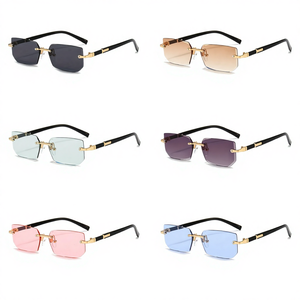
Best Sales Item Cheap Low Price Fashion Multi Color Rimless Rectangle Sunglasses UV400 Small Square Gradient Sunglasses
Rimless BevelUV400 PolycarbonateLightweight Metal

Precision prototypes and bulk-ready models optimized for high-energy visible (HEV 415–455nm) light protection, prescription retrofitting, and high-margin retail performance.
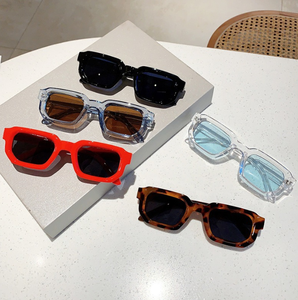
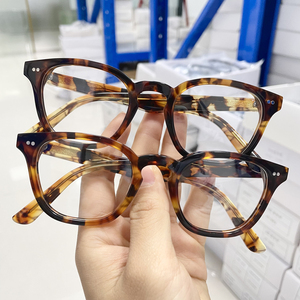
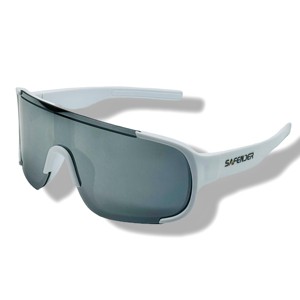
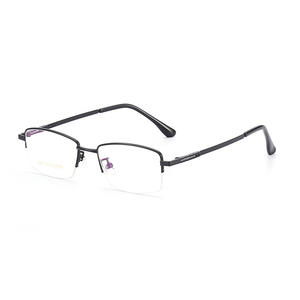


In modern optometry and precision spectacle assembly, the category termed "computer glasses" or "blue light filtering frames" has undergone a profound transformation. What once began as rudimentary planar surface coatings that imparted an undesirable, heavy amber or yellow residual tint has evolved into advanced vacuum dielectric sputtering and substrate-level monomer absorption technologies. As commercial optical retail buyers and brand managers source OEM/ODM optical frames, assessing both frame mechanical integrity and lens compatibility is essential for retail sell-through and brand longevity.
High Energy Visible (HEV) radiation spans the 380nm to 500nm spectrum. However, clinical and metallurgical research confirms that the 415nm to 455nm band presents the greatest risk of photochemical retinal strain, contrast degradation, and circadian rhythm suppression. Precision contract manufacturing for high-performance blue light frames now requires a dual-stage consideration:
Direct infusion of organic absorbing chromophores into the raw CR-39, polycarbonate, or high-index resin matrix. This technique blocks specific 420nm wavelengths while eliminating the purplish cosmetic reflectance common in cheap multi-coatings.
16-to-24 layer ultra-hard multi-dielectric stacks on front and rear surfaces. Incorporating indium tin oxide (ITO) antistatic properties and oleophobic fluorocarbon top-layers to guarantee high light transmission (>98.2%) while rejecting blue glare.
High-speed CNC profile milling ensures standard V-groove depth (typically 0.6mm) and 115° to 125° bevel angles. This prevents internal mechanical stress that could cause optical distortion, birefringence, or premature lens pop-out.
From an OEM/ODM manufacturing perspective, blue light frames must satisfy rigorous physical stability metrics. When optical retail customers glaze prescription Rx lenses into OEM-supplied frames, the chassis must resist thermal distortion during warm-air insertion (commonly required for custom acetate frames heated to 55°C–65°C) without degrading factory alignments or plating coatings.
Commercial wholesale sourcing within the GCC, North American, and European retail chains has shifted away from indiscriminate bulk SKU importing toward lean, high-velocity programmatic procurement. Procurement directors and boutique owners prioritize frame architecture that meets the following commercial benchmarks:
1. Ultra-Lightweight Biocompatible Thermoplastics (TR90 & Ultem PEI): Standard injection-molded acrylics are rapidly losing floor space to memory thermoplastics. Our proprietary Swiss-formulated TR90 injection molds provide a specific density of roughly 1.14 g/cm³, reducing temple and nasal pressure for all-day digital workers and gamers.
2. Bio-Based and Recycled Acetate Resins: Regulatory frameworks across European and Gulf markets now reward supply chains with verifiable eco-credentials. Forward-looking procurement demands plasticizer-free, cotton-seed and wood-pulp-derived cellulose acetate (with bio-content exceeding 68%) that balances rich luster and milling stability with zero endocrine-disrupting phthalates.
3. Dual-Purpose Hybrid Frames (Clip-On & Photochromic Ready): Digital device users regularly transition between office workstations and intense natural sunlight. OEM product designs with CNC-machined hidden neodymium magnetic bridge clips or custom groove profiles for 1.56 to 1.74 photochromic blue-cut lenses command superior shelf sell-through and yield higher average order values (AOV) for retailers.
Headquartered in Dubai's strategic trade corridor with engineering alliances across Turkey, France, and high-precision Asian manufacturing centers, our framework delivers operational clarity, strict quality control, and regional supply security.
We supply exclusively to registered optical shops, healthcare institutions, and brand distributors. We never operate direct-to-consumer storefronts, safeguarding your margins and eliminating channel conflict.
Our catalog includes AirLite (Turkish-engineered TR90 featherweight frames), Ottillio (refined French luxury aesthetic), and Gözşik (bold contemporary designs)—eliminating internal model cannibalization.
Every batch undergoes automated 20,000-cycle temple endurance fatigue tests, bridge strain evaluations, salt-spray plating adhesion verification, and spectroradiometric blue-cut transmission audits.
From 3D CAD modeling, custom tooling, and bespoke pantone coloration to laser brand engraving, customized micro-cloth fabrication, and retail-ready FSC paper hard cases.
Operating out of Deira, Dubai, we streamline Gulf and MENA customs clearance, offering fast fulfillment and dependable cross-border freight dispatch across the UAE, KSA, Qatar, and international ports.
All supplied optical products comply with international medical device and eyewear safety mandates, including CE EN ISO 12870, ANSI Z80.3, FDA Registration, and REACH chemical standards.
Clear, direct specifications to simplify contract negotiations, technical evaluations, and production runs.
For custom OEM/ODM production involving custom tooling, pantone injections, or private-label acetate laminations, our baseline MOQ is typically 300 to 500 units per model, subdivided across 2–3 color variations. For catalog items in our ready-inventory line (AirLite, Ottillio, and Gözşik), wholesale opening orders begin as low as 50 to 100 units across mixed styles.
Yes. We can outfit frames with non-prescription plano lenses featuring 420nm mass absorption or surface vacuum AR blue-reflection coatings. These lenses allow optical retailers to position the frames directly for walk-in computer screen users, while maintaining correct base curve geometry (4.00D or 4.50D) for standard in-house optical lab edging.
Prior to shipment, batch samples undergo standardized 48-hour neutral salt spray (NSS) environmental exposure to ensure metal plating, electroplating, and lacquers resist human sweat and humidity. Hinge mechanisms undergo computerized 20,000-cycle open-and-close cycles to guarantee frictional torque stability without pin detachment or loose arm movement.
We work directly with standard 2D dimensional schematics (DWG, DXF) and 3D CAD files (STEP, IGES, SolidWorks). If you only have hand-drawn design briefs or physical benchmarks, our industrial engineering team can generate 3D rendering proofs, rapid 3D SLA physical prototypes (within 72 hours), and final CNC steel tooling schematics for review.
Yes. Our frame geometries maintain minimum vertical B-dimension heights (typically ≥32mm for progressive lens corridor clearance) and stable pantoscopic tilts (8° to 10°). For acetate and monel collections, our rim eyewire grooves are cut with balanced structural thickness to hide thick minus-power lens edges and prevent frame splay.
For custom OEM/ODM production runs, tooling and mold preparation takes 25 to 30 days, followed by sample confirmation and mass production cycles of 45 to 60 days. In-stock catalog orders from our Dubai fulfillment operations can be consolidated and dispatched within 5 to 7 business days, providing optical retail buyers with predictable inventory turns.