Partnership desk+971 50 359 50 86
Partner Enquiry Engineered from aerospace-grade superelastic nickel-titanium (Nitinol), high-tensile beta-titanium, and medical-grade austenitic stainless steel. Designed for high-stress deformation recovery, ultra-light daily wear, and export-grade structural longevity.

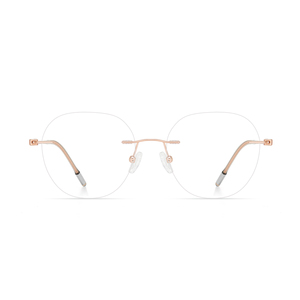
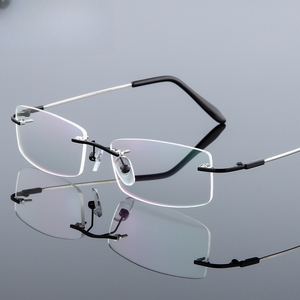

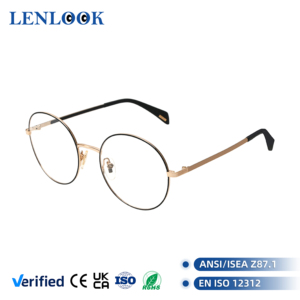
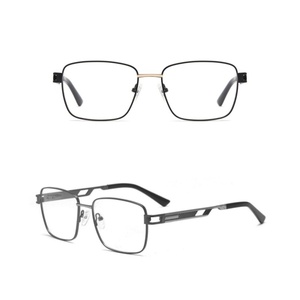
Memory metal frames do not behave like conventional monel, beryllium copper, or annealed aluminum. Unraveling the thermo-elastic martensitic transformation that defines high-yield China frame manufacturing.
Superelastic shape memory alloys (NiTi / Nitinol typically comprising 55-56% Nickel and 44-45% Titanium) switch crystallographic structures under mechanical stress. When bent by an end-user, stress-induced martensite forms immediately, absorbing massive kinetic deformation without lattice slip. Releasing the strain triggers an instantaneous reversion back to the parent austenite phase, yielding 100% geometric elastic recovery.
Leading China manufacturers utilize distinct metallurgy for temples, bridges, and rim barrels. While bridge segments mandate binary Nitinol for twisting survival, temples often deploy cold-worked Beta-Titanium (Ti-15V-3Cr-3Sn-3Al) to deliver an optimized blend of elastic deflection, rigidity for optometric prescription edging, and effortless temple adjustments without warm-water heating baths.
Exporting to European Union (REACH Directive Annex XVII) and North American markets requires rigorous passivation. Top Chinese exporters employ automated multi-stage vacuum Physical Vapor Deposition (PVD) ion plating alongside sub-micron titanium nitride (TiN) barrier interlayers, dropping nickel release to undetectable levels (< 0.05 μg/cm²/week under EN 1811:2011+A1:2015).
China accounts for over 70% of the world's precision spectacle frames and structural displays. Centered within Danyang (Jiangsu), Shenzhen (Henggang), and Wenzhou (Zhejiang), this integrated value chain guarantees unmatched lead times and micro-tolerance finishing.
| Critical Specification Parameter | Standard Alloy (Monel / Steel) | Commercial Grade Memory Metal | Aerospace Superelastic Nitinol / Beta-Ti |
|---|---|---|---|
| Yield Strength (σ0.2, MPa) | 320 – 450 MPa | 750 – 900 MPa | 1,150 – 1,480 MPa |
| Maximum Elastic Recovery Strain | < 0.5% (Permanent Deform) | 4.5% – 6.0% | 8.0% – 10.5% Maximum Strain |
| Density (Specific Weight, g/cm³) | 8.80 g/cm³ | 6.45 g/cm³ | 4.51 – 6.45 g/cm³ (Ultralight) |
| Corrosion Resistance (ISO 12870 Sweat Test) | Pass 24 Hours | Pass 72 Hours | Pass 168+ Hours (Severe Grade 4) |
| Bending Fatigue Life Cycle (±90°) | < 1,500 Cycles | > 25,000 Cycles | > 65,000 Cycles without Failure |
| Export Compliance Certifications | Basic RoHs | CE, FDA, REACH Annex XVII | ISO 13485, CE Class I Medical, EN ISO 12870 |
Ultra-fine milling centers running customized carbide tooling sculpt intricate titanium end-pieces, rim lock barrels, and hinge housings down to ±0.015mm tolerances to eliminate lens-pop under torsional strain.
Nitinol cannot be brazed with flux without embrittlement. Certified factories deploy inert-argon shielded pulsed fiber lasers, forming seamless metallurgical joints with 0% crystal boundary oxidation.
Closed-loop vacuum chambers apply Titanium Nitride (TiN), Diamond-Like Carbon (DLC), or real 24K gold nano-coatings ensuring high-hardness scratch resistance (HV > 2200) and uniform coloration.
In-house laboratories verify optical bridge deformation resilience, nose pad pull-off strength (> 100N), temple opening angle endurance, and artificial sweat resistance before consignment dispatch.
Macro shifts in global optical retail and industrial hardware require international procurement directors to adapt early. These key market trends dictate the next wave of high-margin product development.
As augmented reality (AR) and smart audio glasses scale, engineers confront weight, heat dissipation, and internal wiring pinch-points. Superelastic memory metal bridges provide the precise clamping pressure needed to keep biometric optical sensors anchored against facial contours without painful temple temple pressure.
Traditional hinge screws loosen and fall out under sustained vibration. Export orders are rapidly swinging toward screwless hinge architectures where wire-EDM cut Nitinol tabs lock directly into CNC temples. This eradicates the single most common consumer return and warranty claim for retail opticians.
Wholesalers no longer source purely metallic frames. Hybrid architecture combines medical-grade Swiss EMS TR90 thermoplastic rims with interior Nitinol skeleton wires. This gives brands trendy chunky visual silhouettes while preserving hyper-light ergonomics (weighing under 10 grams total).
Circumventing middlemen trading companies through verified tier-1 factory export desks unlocks verifiable metallurgical pedigree, bespoke tooling rights, and robust supply elasticity.
Custom temple molds and laser stamp tooling amortize across low production volumes (typically 300 to 500 pairs per SKU). Bypassing tier-2 brokers slashes FOB unit costs by 28% to 42%, defending healthy distributor margins against inflationary shipping rates.
Every melt batch of Nitinol, Beta-Ti wire, or stainless sheet ships with comprehensive 3.1 Mill Test Certificates verifying ASTM F2063 compliance, transition temperatures (Af point verification), and non-toxic elemental purity assays.
To eliminate dead stock inventory, strategic partner programs maintain safety stocks of semi-finished core bridges, temple bars, and rim coils in raw state. When retail trends spike, custom PVD finishing and packaging completes in under 14 working days.
Direct, technical answers addressing the real-world manufacturing, metallurgical, logistical, and compliance questions faced by commercial procurement teams.
Whether you are sourcing high-rotation optical retail assortments, developing custom smart eyewear hardware, or procuring precision architectural metal framing, our technical export desk provides immediate quotation, CAD validation, and physical sample kits.