
Partnership desk+971 50 359 50 86
Partner Enquiry Engineered for maximum retail sell-through across international boutiques and healthcare dispensaries, spanning hand-polished Mazzucchelli acetate, flexible memory TR90, and aerospace metallurgy.
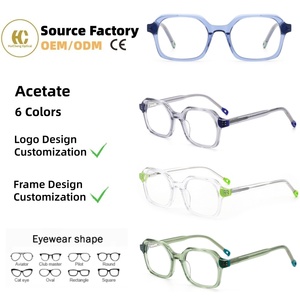

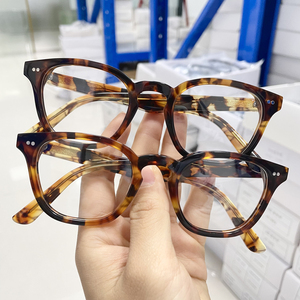
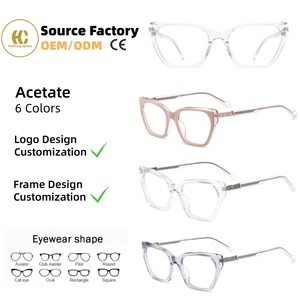
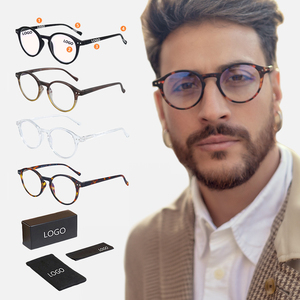
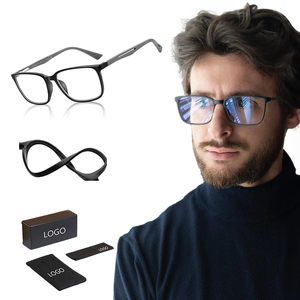

In contemporary ophthalmic manufacturing, selecting top China titanium eyewear frames manufacturers is no longer merely a pricing decision; it is an audit of chemical purity, cold-work forging capabilities, CNC precision tooling, and vacuum surface engineering. As global eyewear retailers diversify away from standard nickel-based monel and basic stainless steels, titanium (Ti) has emerged as the definitive benchmark for medical-grade biocompatibility, ultra-low density (4.51 g/cm³), and extreme fatigue endurance. China accounts for more than 70% of the world's high-tier titanium optical frame output, concentrated primarily in two industrial clusters: the Shenzhen Henggang cluster (renowned for high-end boutique craftsmanship, complex β-titanium sheet wire EDM cutting, and luxury European OEM integration) and the Danyang/Wenzhou industrial corridor (specializing in mass-scale rimless, memory flex, and automated assembly line volumes).
Discerning B2B procurement teams must distinguish between the three metallurgical classifications deployed across China's manufacturing lines:
| Titanium Alloy Classification | Material Composition & Grade | Yield Strength & Elasticity | Primary Optical Applications | Tooling & Brazing Complexity |
|---|---|---|---|---|
| Pure Titanium (α-phase) | Grade 1 / Grade 2 Ti (>99.2% Pure Ti, Fe <0.20%) | Yield: 275–380 MPa; Elongation ~20% | Front eye-wires, bridge blocks, nose pad arms | Argon-shielded vacuum brazing; high tooling wear |
| Beta-Titanium (β-phase) | Ti-15V-3Cr-3Sn-3Al or Ti-22V-4Al | Yield: 850–1100 MPa; High Modulus Flex | Ultra-thin temples, spring bridges, rimless chassis | Demands 5-axis CNC micro-milling & wire EDM profiling |
| Shape Memory Titanium | Nickel-Titanium (Nitinol, ~55% Ni, 45% Ti) | Superelastic hysteresis loop; recovers from 8% strain | Active lifestyle, kid-proof bridges, flex bridge bars | Cryogenic cold forming; laser spot welding required |
When partnering with a premier Chinese contract manufacturer, engineering protocols demand non-destructive spectroscopy (XRF testing) upon raw ingot arrival. Ensuring Grade 1 / Grade 2 titanium compliance guarantees that frames remain completely nickel-free, passing stringent EN ISO 12870 and REACH Annex XVII directives for direct dermal contact.
Strategic purchasing paradigms are rapidly shifting. Forward-looking optical distributors and enterprise optical chains are reshaping supply agreements around five macro trends.
Traditional stamping dies are being superseded by 5-axis high-speed CNC routing. Eyewear brands are demanding dimensional tolerances of ±0.02 mm along the eye-wire rim grove to ensure instant cold-snap lens insertion without localized lens stress birefringence.
In accordance with corporate ESG reporting mandates in Europe and North America, leading factories are establishing closed-loop titanium scrap reclamation cycles. Certified recycled titanium reduces the energy footprint by up to 60% compared to virgin sponge titanium extraction.
Procurement catalogs are dominated by hybrid constructions: ultra-thin surgical titanium chassis wrapped with Mazzucchelli M49 bio-acetate inner rims, or reinforced with flexible TR90 temple tips. This blend combines structural rigidity with rich chromatic luxury.
The global eyewear landscape is experiencing a radical shift away from mechanical friction hinges toward monoblock screwless hinge mechanisms. Traditional hinge screws represent over 68% of post-sale optical dispensary complaints due to thread stripping, screw backing-out, and localized barrel oxidation. Leading Chinese manufacturing partners utilize specialized wire-cut spiral cylindrical joints and folded sheet-metal interlocking systems that operate continuously without fasteners. These systems withstand more than 25,000 continuous opening and closing cycles without mechanical loosening or lateral deflection.
Concurrently, surface treatment has evolved from wet electroplating to advanced Physical Vapor Deposition (PVD) / Ion Plating (IP) executed inside high-vacuum chambers (<10⁻³ Pa). Using cathodic arc evaporation, titanium nitride (TiN), zirconium oxide (ZrO₂), and titanium carbonitride (TiCN) coatings form atomic-level bonding directly onto the substrate. This yields a micro-hardness exceeding 2000 HV and passes the brutal 72-hour artificial sweat test (ISO 12870 clause 4.8) without pitting, peeling, or chromatic discoloration.
In high-complexity low-volume manufacturing, Selective Laser Melting (SLM) and Direct Metal Laser Sintering (DMLS) 3D titanium additive printing enable generative topological optimization. This empowers boutique luxury designers to craft hollow, organic, lattice-structured eyewear fronts that are physically impossible to manufacture using traditional multi-stage stamping presses.
Bridging Chinese manufacturing excellence with our regional partnership desk in Dubai, UAE, we deliver an end-to-end B2B supply chain designed specifically for optical store wall sell-through.
Every production batch passes rigorous optical metrology: bridge deformation, temple endurance cycling, drop-ball impact resistance, nickel release assays (<0.5 μg/cm²/week), and cross-hatch adhesion testing on all IP finishes.
We streamline inventory curation across non-overlapping market positions: AirLite (Turkish-engineered lightweight TR90 & memory flex), Ottillio (refined European luxury elegance), and Gözşik (bold fashion-forward statement frames).
Strategically coordinated out of Deira, Dubai, we provide localized replenishment, bilingual Arabic/English commercial support, zero currency friction, and rapid dispatch across the UAE, Saudi Arabia, Qatar, Kuwait, Bahrain, and Oman.
We do not compete with our partners in the consumer direct-to-consumer space. We work exclusively with licensed optical dispensaries, retail opticians, and regional distributors to protect your retail margins and shelf exclusivity.
Technical, logistical, and commercial answers for optical supply chain directors and retail buying teams.
Consult with our commercial partnership team to receive updated line sheets, lookbooks, wholesale price structures, and custom OEM/ODM manufacturing terms.
