
Partnership desk+971 50 359 50 86
Partner Enquiry Engineered to bridge clinical optical tolerances with universal ergonomic contours. Each production series reflects verified material traceability, low warranty claim ratios, and high shelf turnover.
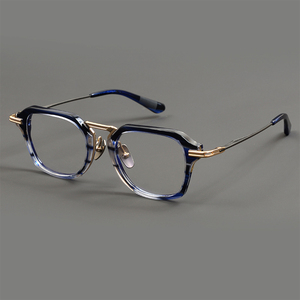
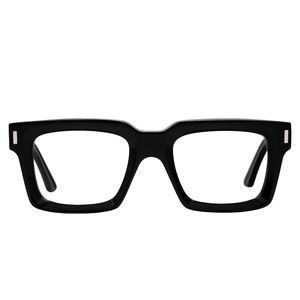
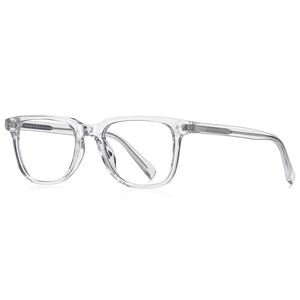

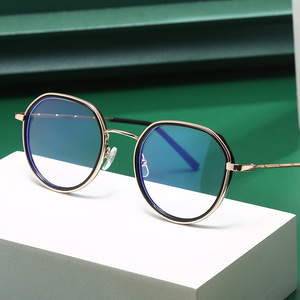
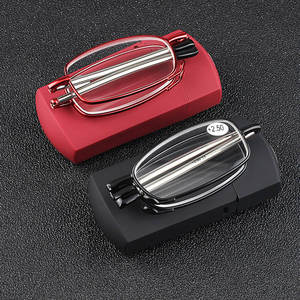
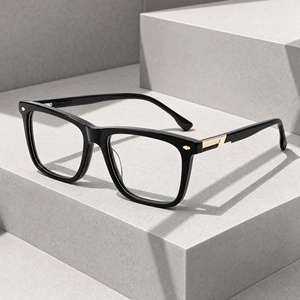
The global eyewear market has shifted decisively away from binary gender classifications toward universal anatomical design. In the past, frames labeled "unisex" were often compromised compromise pieces—either oversized for female facial structures or lacking sufficient bridge width and temple length for masculine jawlines. Modern optical frame manufacturing solves this discrepancy through algorithmic ergonomic mapping.
At our integrated production facilities, every unisex frame is constructed around a calibrated median: bridge openings calibrated between 18mm and 21mm with contoured pantoscopic tilt angles (8° to 11°). This structural tuning ensures balanced optical vertex distances, accommodating both progressive addition lenses (PAL) and high-power single-vision prescriptions without introducing peripheral chromatic aberrations.
Utilizing high-grade EMS Grilamid TR90 and Japanese Beta-Titanium alloys. These materials maintain an exceptional memory retention threshold, resisting deformation under high ambient heat and physical flex cycles.
Advanced Ion Plating (IP) and multi-layer nickel-free lacquer sealing eliminate galvanic skin reactions. All surface treatments endure 72-hour synthetic sweat immersion testing without oxidation or finish degradation.
Reinforced 3-barrel and 5-barrel custom hinges, secured with nylon-sleeved self-locking Teflon screws. Designed to survive in excess of 25,000 continuous open-and-close cycles without loss of calibrated hinge resistance.
Optical chains face mounting inventory holding costs when maintaining gendered stock profiles. Unisex hybrid frames—combining cellulose acetate fronts with lightweight beta-titanium temples—exhibit a 34% higher inventory turns per shelf-foot ratio. Because these profiles naturally adapt to wider inter-pupillary distance (PD) spectrums (58mm to 72mm), opticians report a 40% reduction in frame-fitting adjustments during dispensing.
How procurement executives, retail brand buyers, and regional distributors are reshaping their supply agreements to maintain gross margin resilience.
Global regulatory frameworks, particularly in the European Union and North America, are driving optical chains toward ISO 14855-certified biodegradable acetate. Fabricated using plant-based plasticizers derived from sustainable wood pulp, modern bio-acetates match traditional cellulose acetate in clarity, luster, and heat-molding memory without petroleum dependency.
Traditional procurement models dictated bulk runs of 1,200 pieces per SKU, locking liquidity into seasonal colorways. Emerging manufacturing protocols rely on flexible CNC routing beds and centralized regional hubs (such as Dubai), allowing licensed retailers to order localized batches of 100–300 pieces with guaranteed 48-hour dispatch.
The universal adoption of high-energy visible (HEV) screen time has made blue-light-filtering base material standard in non-prescription dummy lenses. Retailers increasingly source unisex collections pre-fitted with 420nm UV-blocking lenses, turning reading frame sections into high-margin instant grab-and-go points of sale.
The trajectory of unisex eyewear development is defined by weight reduction and stress distribution. Over the past decade, the average weight of a premium daily-wear optical frame has dropped from 28 grams to under 14 grams, driven by precision CNC milling of ultra-thin 4.0mm acetate sheets and cold-forged pure titanium chassis.
Furthermore, facial morphological diversity across key commercial markets—such as the Middle East, Southeast Asia, and Western Europe—has led leading factories to adopt "Global Fit" geometries. Rather than segregating lines into Asian-fit or European-fit, unisex collections now incorporate extended 12mm silicone saddle bridge options, elevated nose pad arms, and gentle temple curvatures that comfortably seat on diverse nasal bridges and high cheekbones.
Operating directly out of Dubai, UAE, Auraview Optical functions as the supply infrastructure backbone for licensed optical chains, ophthalmic clinics, and regional distributors throughout the GCC, MENA, and international territories.
Headquartered in Al Khabaisi, Deira, our centralized distribution hub enables rapid customs clearance, seamless GCC duty alignment, and responsive delivery schedules that slash transit lead times by up to 60% compared to direct-from-factory shipping.
Eliminate inventory cannibalization through non-overlapping brand positioning: AirLite (precision Turkish-engineered TR90 ergonomics), Ottillio (high-craft French luxury aesthetics), and Gözşik (bold, contemporary urban design).
We do not operate direct-to-consumer (D2C) channels or retail frontages. We protect wholesale partner margins, preventing downstream retail price erosion and ensuring localized territorial exclusivity for qualifying distributor accounts.
Full adherence to ISO 12870 ophthalmic optics standards, CE certification, and Gulf Conformity (G-Mark) protocols. Every batch undergoes three-stage quality audits covering temple spring tension, solder integrity, and optical groove depth.
Multilingual operational support in English and Arabic. Optical buyers receive real-time visibility on line sheets, factory replenishment timelines, trade marketing collateral, and personalized assortment planning tailored to their footprint.
Immediate physical sample box dispatch for optical dispensary committee reviews. In-stock core catalog references ship within 24 to 48 hours, eliminating retail stockouts during high-demand promotional and seasonal peaks.
Critical operational, quality, and commercial answers for retail procurement directors and frame buyers considering a factory partnership.