
Partnership desk+971 50 359 50 86
Partner Enquiry High-turnover optical frames manufactured under stringent engineering tolerances, tailored for the Central American independent retail and optometry network.
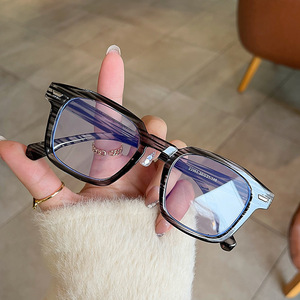
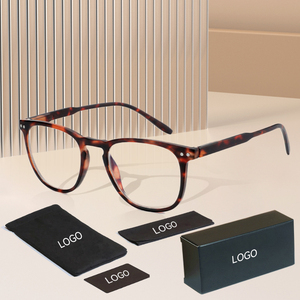

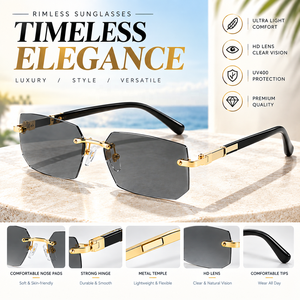
As the optical marketplace across Central America evolves from transactional trading to clinical precision and brand-led consumer loyalty, Costa Rica represents the standard-bearer for sophisticated optometric healthcare in the region. With a resilient universal healthcare model backed by the Caja Costarricense de Seguro Social (CCSS), an affluent middle-class consumer base across the Greater Metropolitan Area (GAM), and a burgeoning private optometry clinic ecosystem, importing metal eyeglass frames requires precision engineering, material biocompatibility, and consistent supply cadence.
"In Costa Rica's demanding tropical macro-climate, the lifespan of optical hardware is governed by electroplating integrity and corrosion resilience. Chinese manufacturers serving San José, Heredia, and Alajuela must engineer alloys that withstand maritime humidity without pitting or nickel leaching."
Optical distributors operating in San José, Escazú, and coastal provinces such as Puntarenas and Guanacaste navigate distinct environmental parameters. Frames imported for this market face acute metallurgical stress tests:
Maritime Salinity and Tropical Atmospheric Moisture: Optical retail consumers residing along the Pacific and Caribbean coastlines subject metal eyeglass frames to accelerated corrosion. Conventional baseline alloys degrade rapidly, leading to hinge oxidation, bridge discoloration, and peeling lacquer. Our manufacturing process integrates physical vapor deposition (PVD) titanium plating and double-layer anti-sweat polyurethane electrophoretic sealing over high-grade stainless steel and Monel alloys, ensuring compliance with international sweat-resistance testing (EN ISO 12870).
Clinical Ergonomics & Progressive Lens Accommodations: The private optical sector in Costa Rica shows higher adoption rates of multifocal and progressive lenses (freeform designs) compared to neighboring Central American markets. Our metal optical frames feature a minimum B-measurement (lens height) of 34mm to 38mm, engineered with precision barrel rimlocks that maintain structural alignment under high torques, preventing lens slippage or axis misalignment when local optical labs edge high-index prescription blanks.
Digital Fatigue in Central America’s Tech Hub: With major multinationals establishing corporate headquarters and tech campuses within the free trade zones of Heredia and Cartago, the urban population spends extensive hours before visual display terminals. Our frames are built with screwless or micro-spring hinges, accommodating blue-light-filtering blanks and thin anti-reflective coatings without putting pressure on temporal bones during 10-hour working days.
According to trade data, Costa Rican optical frame imports from China have transitioned from unbranded, low-grade commodities to specialized, design-led, certified medical devices. Three core trends dominate the local commercial landscape:
De-commoditization and Direct Factory Partnerships: Historically, independent opticians in Costa Rica purchased frames through intermediaries in Miami or Panama's Colon Free Zone. Today, modern retail optical chains and distributor groups in San José circumvent multi-tiered markups by contracting directly with specialized Chinese original design manufacturers (ODMs). This shift delivers 35% to 50% gross margin improvements, providing liquidity to invest in localized point-of-sale branding.
Demand for Hypoallergenic and Ultra-Light Materials: Dermatological sensitivity to nickel-heavy alloys is a common issue reported by Central American optometrists. Consumer preferences have decisively tilted toward pure titanium, memory beta-titanium wire, and medical-grade stainless steel (SUS304/SUS316L). In our production lines, frames undergo rigorous nickel-release spectrometry before export, ensuring skin neutrality and zero cytotoxic reactions.
Regulatory Tightening via the Ministry of Health (Ministerio de Salud): Medical device regulations under executive decrees require importers to demonstrate verifiable manufacturing oversight. Partnering with a Chinese manufacturer boasting ISO 9001:2015, ISO 13485 (medical devices), and CE compliance documentation accelerates the sanitary registration (Registro Sanitario) process, mitigating custom clearance delays at Puerto Limón or Juan Santamaría International Airport (SJO).
Leveraging deep industrial clusters in Wenzhou, Danyang, and Shenzhen to provide European-grade aesthetic tolerances at scaled manufacturing prices.
Utilizing high-tensile stainless steel, beta-titanium, and nickel-free memory alloys. Every export batch undergoes comprehensive salt-spray testing exceeding 72 hours, guaranteeing structural longevity under tropical humidity.
We eliminate inventory deadweight by engineering cohesive collections spanning classic rimless business styles, high-fashion geometric hexagons, and durable double-bridge aviators, optimizing optometry shop sell-through.
Complete provision of Certificates of Free Sale (CFS), Declarations of Conformity, and batch-traceable inspection sheets, ensuring rapid customs processing through Costa Rican customs (Dirección General de Aduanas).
Technical, logistical, and commercial queries answered for independent optical store owners, clinic chains, and commercial importers.
For custom OEM production involving bespoke branding and custom plating colors, our MOQ starts at 300 to 500 units per model (with split colorways). For our ready-to-ship catalog lines, optical practices can initiate orders with flexible MOQs starting at 50 units per order.
We implement multi-stage electroplating, starting with an anti-corrosion barrier base layer, followed by fine metal deposition (gold, rhodium, gunmetal) and an electro-cured nano-lacquer seal. All batches pass 48-hour to 72-hour artificial sweat immersion testing under ISO 12870 parameters.
Yes. We offer high-definition precision laser engraving on inner temple arms, nose-pad arm pad prints, demo lens pad printing, and full custom-branded cases, hard clamshell boxes, and microfiber cleaning cloths configured to your store's visual identity.
Air freight via DHL, FedEx, or dedicated air-cargo corridors to Juan Santamaría Airport (SJO) typically takes 5–8 business days. For volume container shipments (FCL/LCL), transit from Ningbo or Shenzhen port to Puerto Limón or Puerto Caldera takes between 24 and 32 days depending on shipping line schedules.
Yes. Our optical front-curves are specifically pressed with base-curve 4.0 to 4.5, avoiding the flatter curvatures that cause visual aberrations or strain in progressive optics. Strong eye-wire profiles prevent frame deformation when beveling high-index prescriptions.
We provide full commercial invoices, packing lists with Harmonized System (HS) codes (typically 9003.11/9003.19), CE Declarations of Conformity, ISO compliance certificates, and Certificates of Analysis (CoA) to satisfy Costa Rica's Ministerio de Salud regulatory verifications.