Partnership desk+971 50 359 50 86
Partner Enquiry Curated from our multi-brand manufacturing portfolio, these 8 core references combine thermo-stable resilience, high elastic recovery, and ergonomic bridge profiles tailored to Northern and Eastern European facial anthropometry.
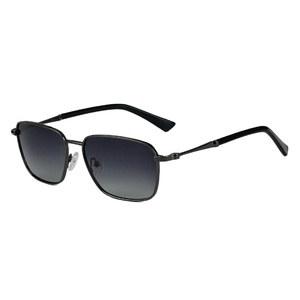
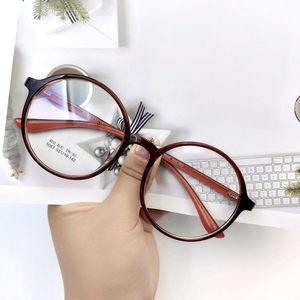
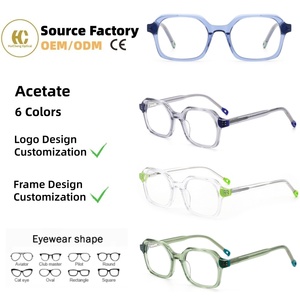
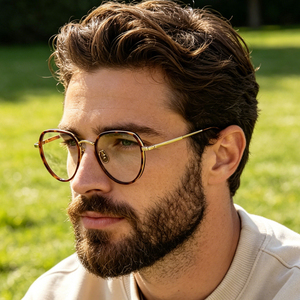
Optical hardware engineered for Moscow, Saint Petersburg, the Urals, and Siberian federal districts must conquer environmental stresses unheard of in temperate zones. Standard commercial acetate and cheap polycarbonate frequently crack, become brittle, or lose dimensional tolerance under Northern conditions.
In regions such as Novosibirsk, Krasnoyarsk, and Yakutsk, consumers transition from severe outdoor temperatures (-30°C to -45°C) directly into centralized radiant interior heating (+22°C). Ordinary polymers experience glass transition shock, leading to micro-fissures around lens bevels. Our OEM flexible TR90 and β-titanium retain complete molecular elasticity and shape-memory retention across a wide -50°C to +80°C operating envelope.
Russian consumers routinely wear dense wool beanies, ushankas, and heavy balaclavas for five to seven months annually. Standard rigid spectacle temples press aggressively against the mastoid process and temporal bone, causing cephalic discomfort and frame warping. Our ultra-thin 0.6mm memory metal and flexible polymer temples curve gently around cranial contours, sustaining comfortable retention pressure without deformation.
From cross-country skiing and snowmobiling in Karelia to heavy industrial operations in Chelyabinsk and Norilsk, eyewear encounters frequent physical impacts. Flexible spectacle frames manufactured with memory polymers and screwless flex hinges eliminate shattering risks, safeguarding patient vision while drastically cutting retail return rates for local optical salons.
Understanding the molecular behavior of optical frames is essential for Russian optical retail category managers, optometric clinicians, and procurement directors evaluating product lifecycle value.
| Material Category | Elastic Memory Retention | Cold Embrittlement Point | Specific Density | Corrosion & Sweat Resistance | Recommended Russian Salon Application |
|---|---|---|---|---|---|
| Swiss Grilamid TR90 (Polyamide 12) | 98.5% Elastic Return | Retains flexibility below -40°C | 1.14 g/cm³ (Featherweight) | Immune to sebum, cosmetics & road salts | High-volume retail frames, kids daily wear, urban sports |
| Nitinol / Shape Memory Alloy (SMA) | Super-Elastic Pseudo-Plastic | Continuous thermal stability to -50°C | 6.45 g/cm³ (Engineered micro-wire) | Inert passive titanium oxide layer | Rimless luxury eyewear, heavy-prescription support bridges |
| Ultem PEI (Polyetherimide) | High Rigidity & Flexural Modulus | Dimensionally stable to -35°C | 1.27 g/cm³ (Ultralight) | Chemical and solvent proof | Ultra-thin business optical styles, clip-on polarized frames |
| Conventional Cellulose Acetate | Rigid / Plastic Deformation Risk | Brittle fracturing below -10°C | 1.28 – 1.32 g/cm³ (Heavier) | Prone to surface whitening over 24 months | Indoor luxury statement pieces (strictly indoor fashion) |
Every production run destined for the Russian Federation is subjected to our proprietary Cryo-Flex Durability Standard. Frames undergo 72 hours of cyclic temperature stabilization between -40°C and +40°C at 85% relative humidity in our environmental simulation chambers, followed by 50,000 continuous hinge flexions and a 180° outward temple splay test. This guarantees that your optical boutique chains (from Moscow to Vladivostok) experience zero warranty returns caused by cold-induced hinge fractures or rim failure during lens glazing.
The geopolitical and commercial realignment in the Eurasian Economic Union (EAEU) has fundamentally altered how optical chains, independent ophthalmic salons, and medical distributors source frames.
Due to the exit or retail withdrawal of major Western European holding groups, Russian optical retailers (including Ochkarik, Smotrish, Linzy Darom, and regional chains in the Urals and Tatarstan) have shifted away from third-party European intermediaries. They now contract directly with established B2B OEM manufacturing facilities capable of delivering European-caliber aesthetic designs with dependable Eurasian delivery schedules.
Consumers across Russian metropolitan centers face rising retail replacement costs for prescription progressive and high-index lenses. Consequently, patients demand resilient, durable frames that last multiple prescription cycles. Ultra-flexible TR90 and shape-memory titanium frames have outpaced classic decorative frames, showing compound annual growth exceeding 18.4% within domestic optical clinics.
The transition toward direct ruble-to-yuan (RUB/CNY) clearing mechanisms via CIPS and direct clearing bank channels has eliminated foreign exchange volatility and Western banking friction. Coupled with established containerized rail corridors traversing Manzhouli-Zabaikalsk into Moscow transport hubs (Vorsino and Bely Rast), delivery cycle times have compressed from months to predictable 14–21 day journeys.
Drawing on decades of precision optical manufacturing, dedicated brand portfolio incubation, and responsive Eurasian trade execution, we provide Russian optical businesses with an unshakeable competitive edge.
Every batch undergoes 14-stage quality gates: 4-axis CNC hinge milling checks, bridge tensile tolerances, multi-layer vacuum electroplating adhesion, and optical alignment verification prior to container sealing.
From custom 3D CAD modeling tailored to Slavic skull anthropometry to pad printing, laser logo etching, and custom retail packaging with Russian Cyrillic specifications, we transform your private label vision into market-ready stock.
We respect our retail partners. We do not operate consumer-facing retail platforms or cross-border e-commerce discounters. Our sole mission is to ensure your optical frame walls maintain high sell-through and healthy gross margins.
Coordinated export documentation, customized packing lists, bilingual commercial invoices, HS code alignment (9003.11 / 9003.19), and seamless customs handling through authorized Eurasian transport corridors.
Direct, actionable answers to critical questions regarding EAC declaration, Roszdravnadzor registration dossiers, logistics channels, and private-label production minimums.
Frames exported to Russia must comply with Technical Regulations of the Customs Union (TR CU / EAC). For corrective optical frames classified as medical devices, importers typically register with Roszdravnadzor (Federal Service for Surveillance in Healthcare) or utilize the EAEU medical device registration dossier. We supply comprehensive technical product files, ISO 12870 mechanical safety test protocols, biocompatibility certificates (ISO 10993 for skin irritation and cytotoxicity), and factory quality management declarations to facilitate registration by your compliance broker.
For existing catalog references (such as our high-elastic TR90 and titanium memory series), our starting wholesale MOQ begins at 300 pieces per model across 3 to 4 colorways with your private laser-engraved temple branding. For completely custom ODM tooling (bespoke bridge width, customized eye size, and exclusive temple styling), our minimum tooling requirement is 1,200 pieces, offering full mold exclusivity within the Russian Federation territory.
We accommodate direct international trade settlement in Chinese Yuan (RMB / CNY) through cross-border interbank payment channels (CIPS) and major non-sanctioned financial institutions (such as VTB Shanghai branch and authorized regional clearing banks). This completely bypasses SWIFT friction and foreign currency conversion losses, providing clear commercial invoice pricing for your accounting division.
We provide multiple logistics tiers: Express Air Cargo directly to Moscow Sheremetyevo (SVO) or Domodedovo (DME) in 5 to 8 business days for urgent sample launches; and Accelerated Container Rail via the Zabaikalsk / Manzhouli land port into Moscow Vorsino Terminal in 16 to 22 calendar days. From Moscow distribution hubs, domestic logistics partners (such as CDEK, Деловые Линии, or PEC) easily manage regional distribution to provincial branches.
Yes. Many standard Asian-fit optical frames feature narrow pantoscopic angles and low-bridge nose pads that do not rest comfortably on Northern/Eastern European facial contours. Our Russian export collection is specifically engineered with European / Slavic Anthropometric Geometry: standard bridge widths of 17–19mm, expanded eye sizes (52–56mm), and extended temple lengths (145–150mm) to ensure balanced weight distribution and comfortable vertex distance.
Flexible frames must balance elasticity with sufficient rim rigidity so thick high-minus or progressive lenses do not pop out under thermal expansion or structural torsion. Our optical engineers incorporate micro-engineered grooved rim profiles and reinforced eyewires with specialized lens bevel retention angles. This design retains deep lens seating even under severe torsional stress or rapid sub-zero temperature swings.
Partner directly with an established B2B manufacturer capable of custom branding, rigorous batch testing, and reliable Eurasian order fulfillment. Request line sheets, material certificates, and physical sample kits today.